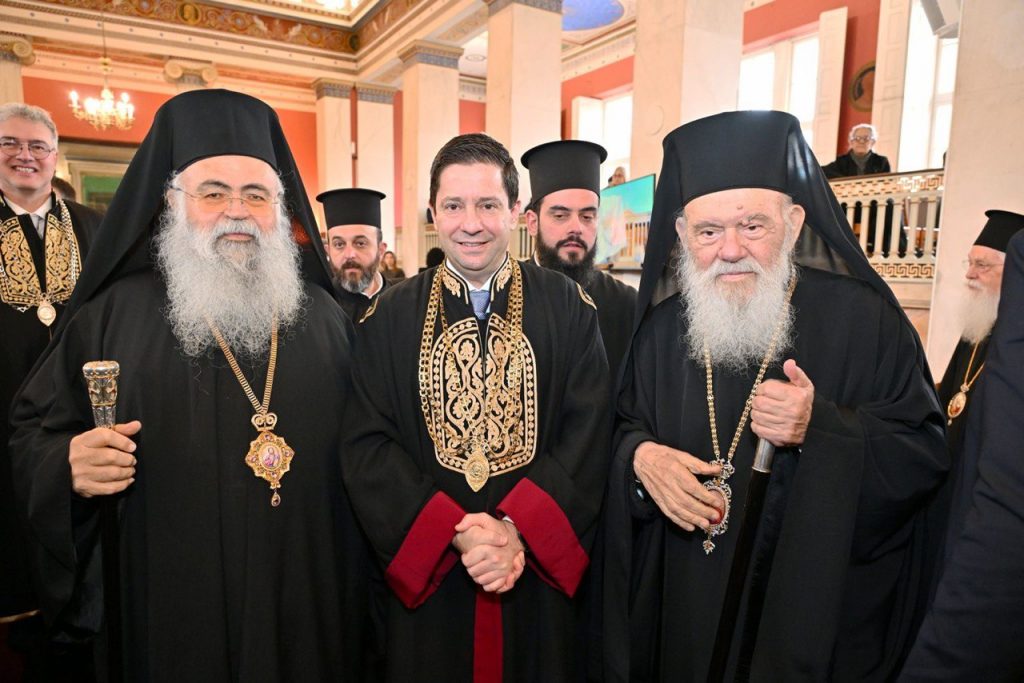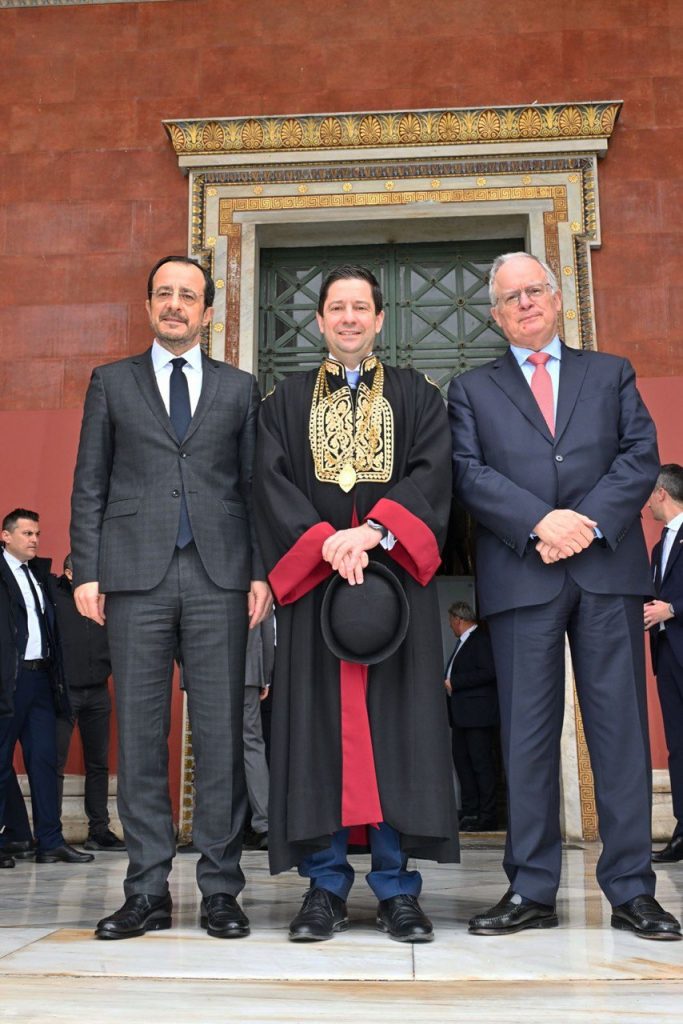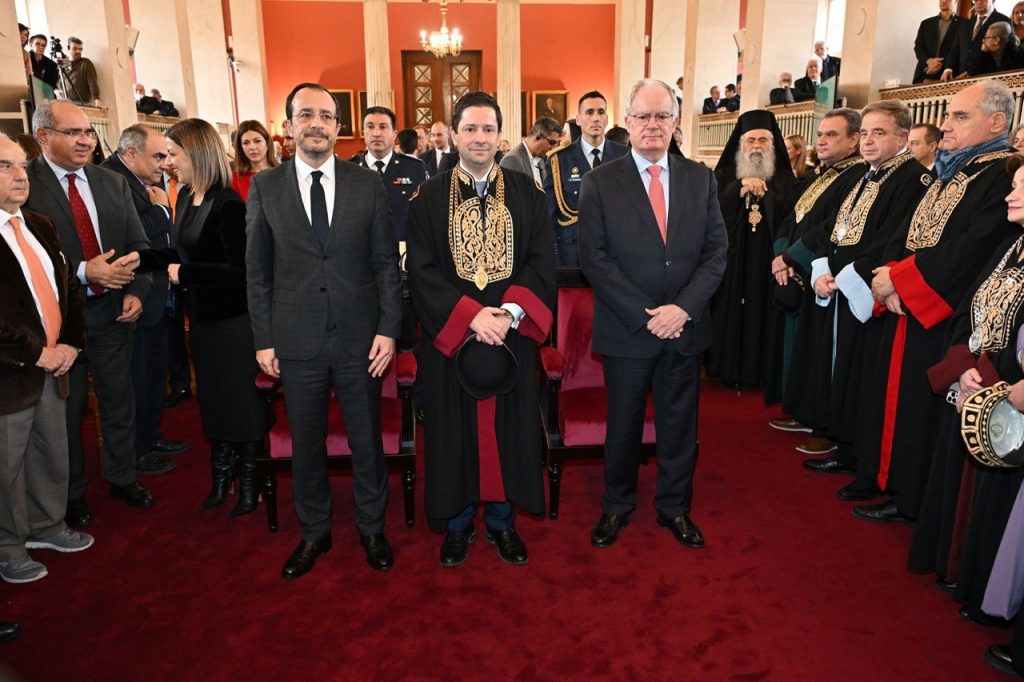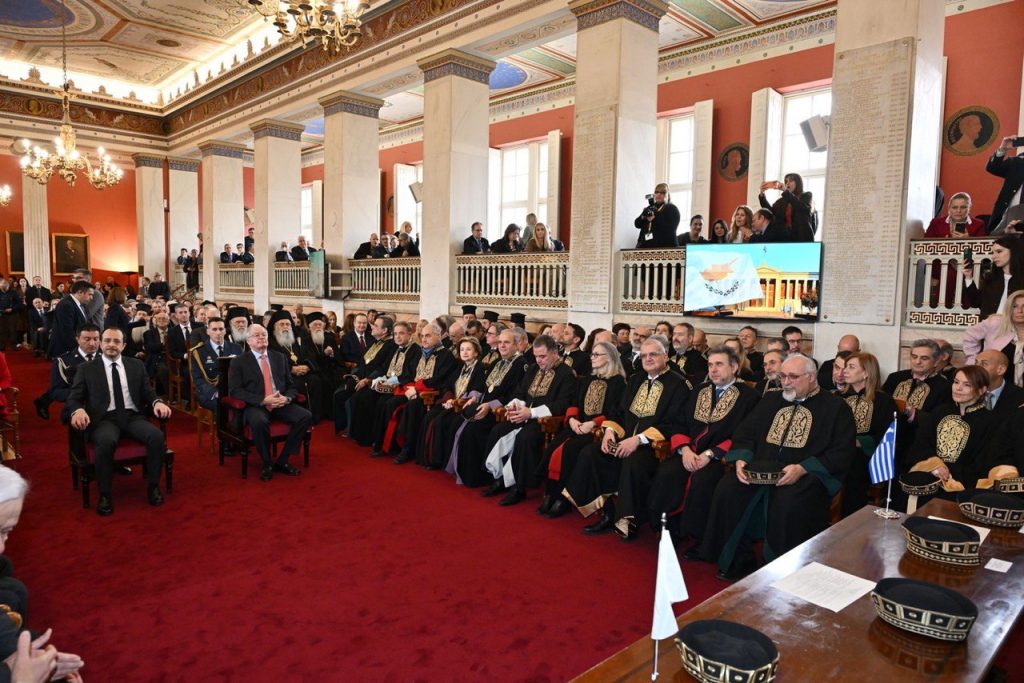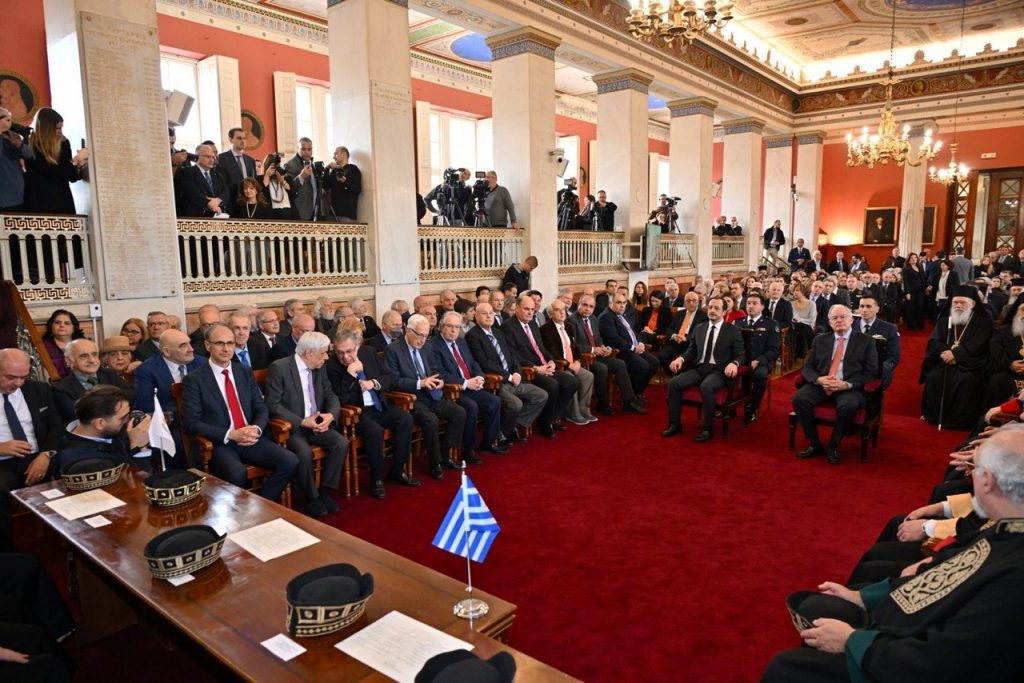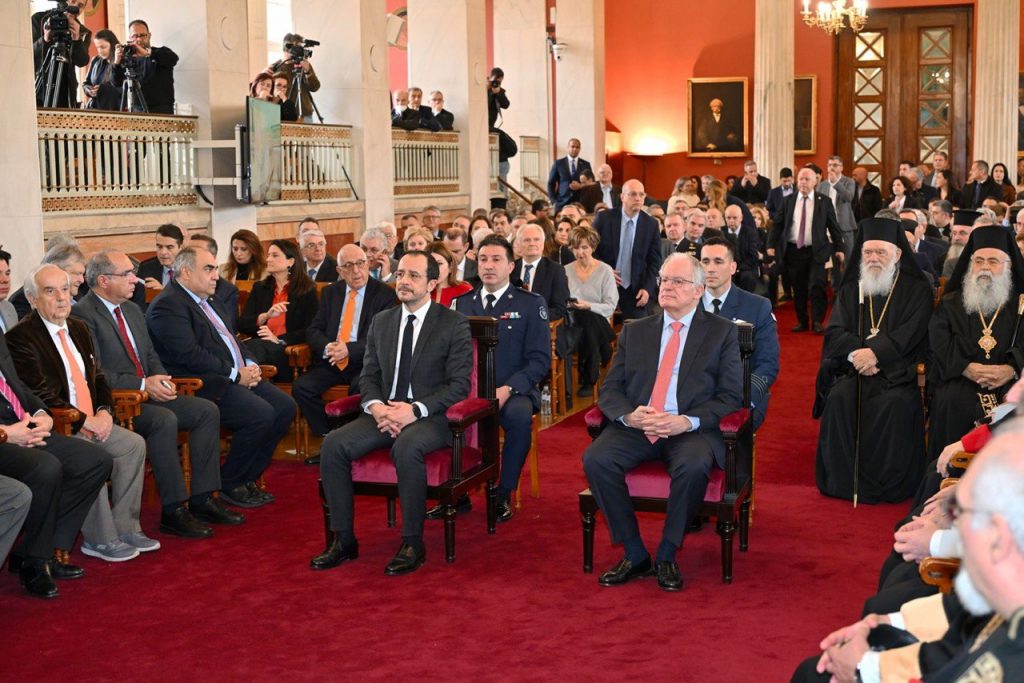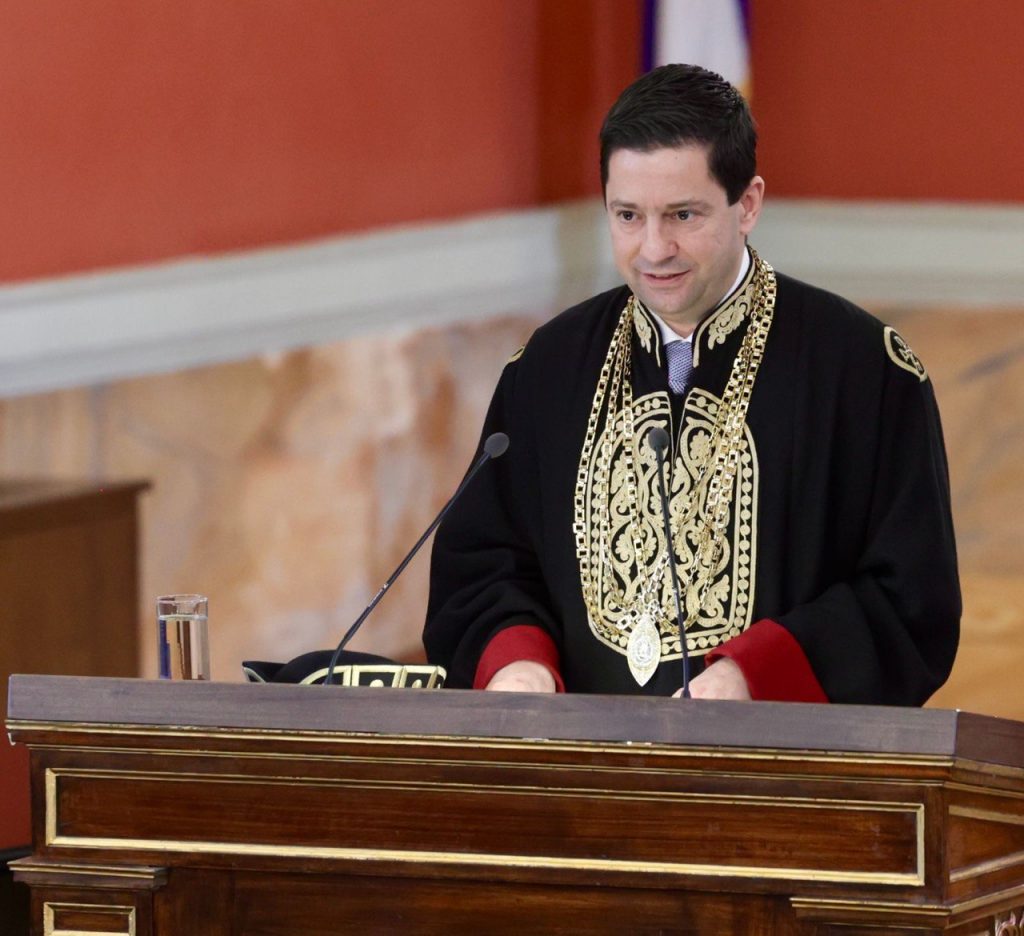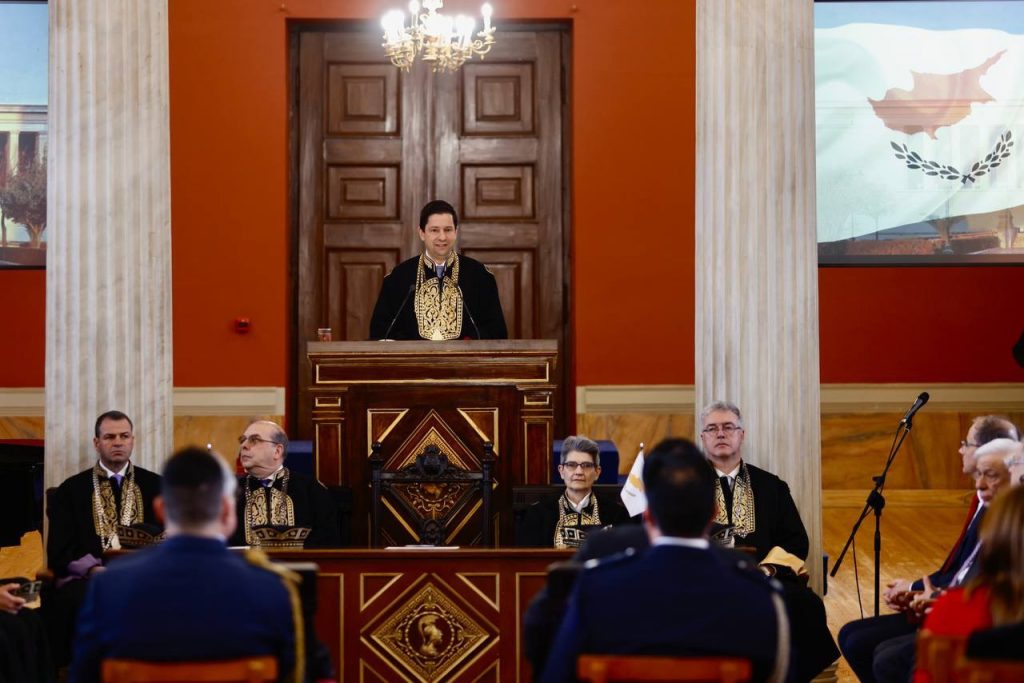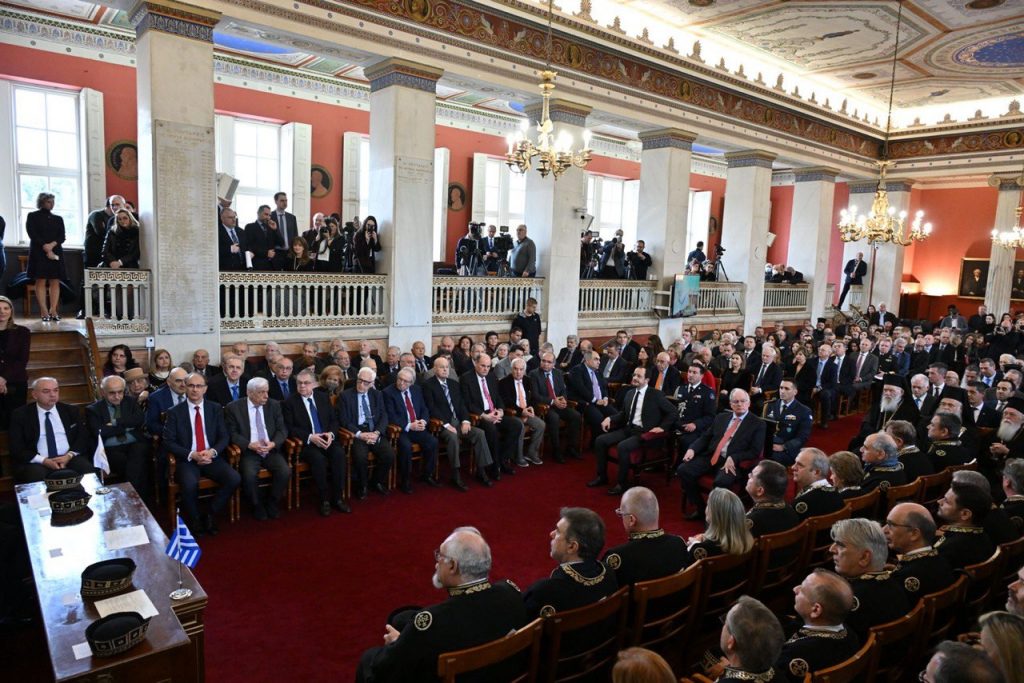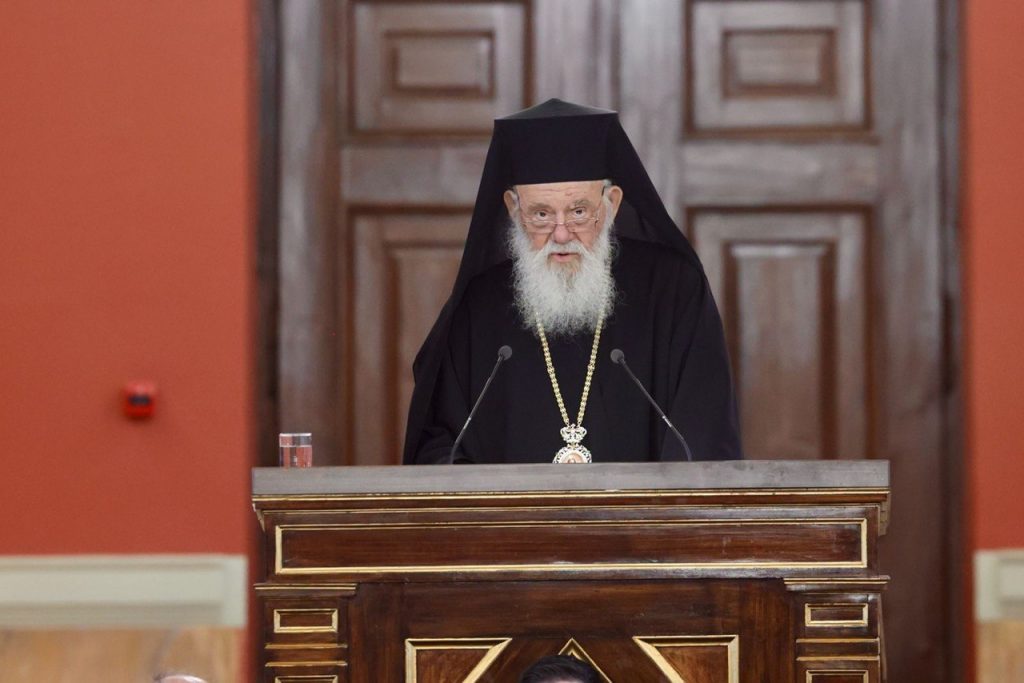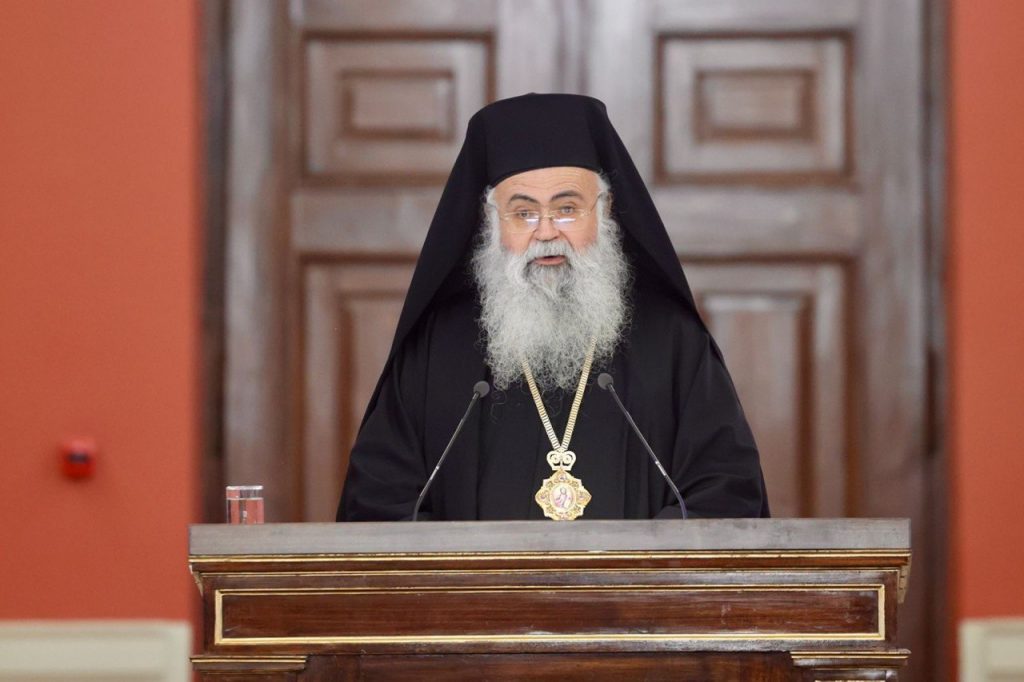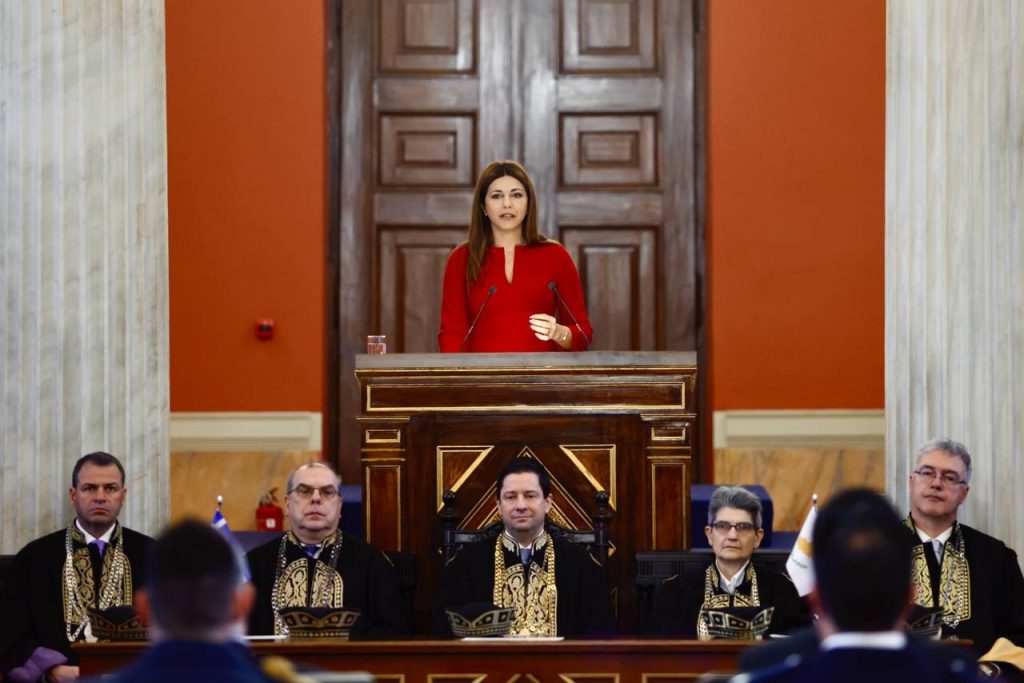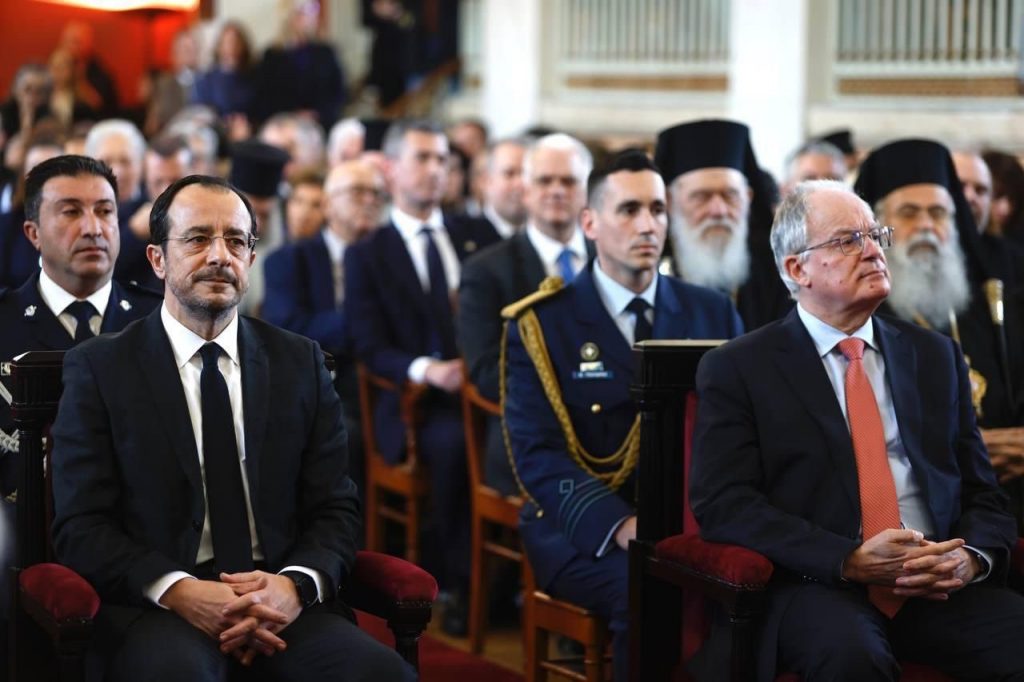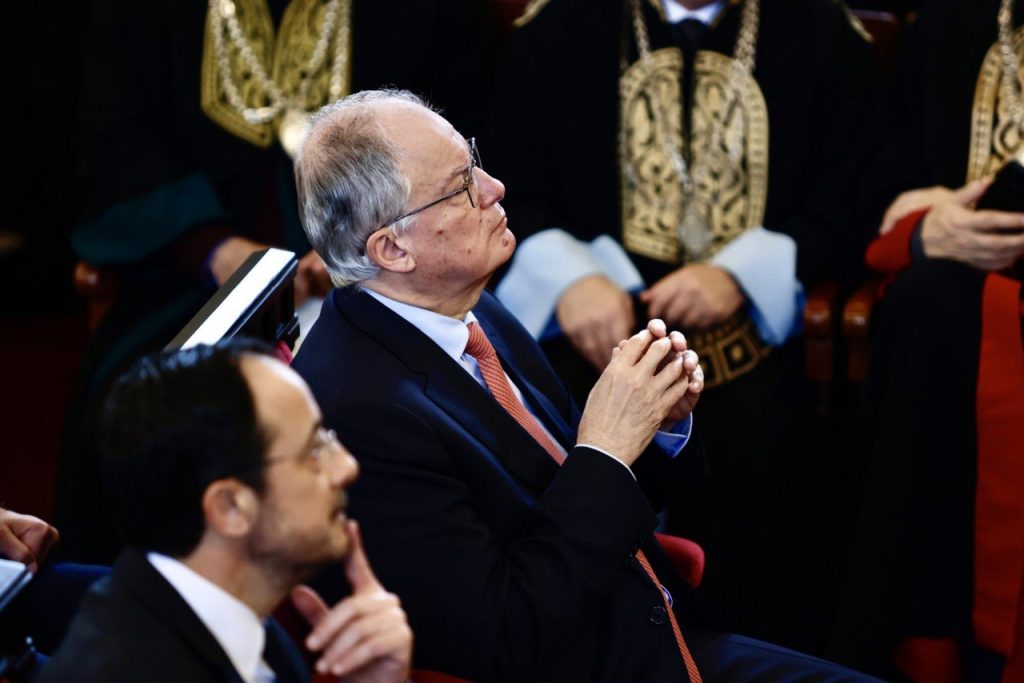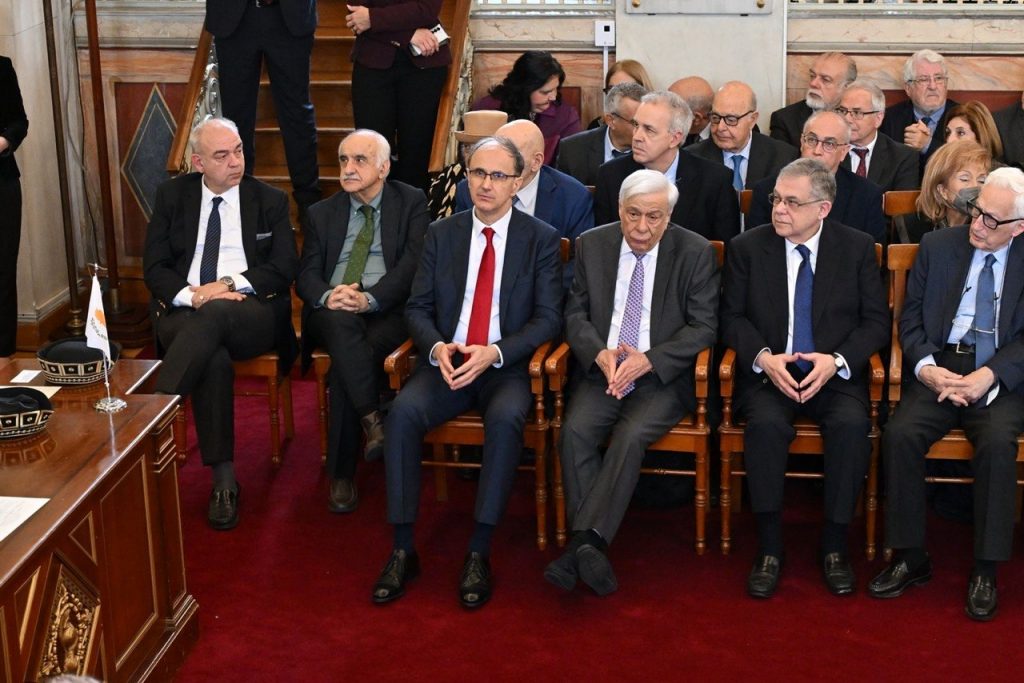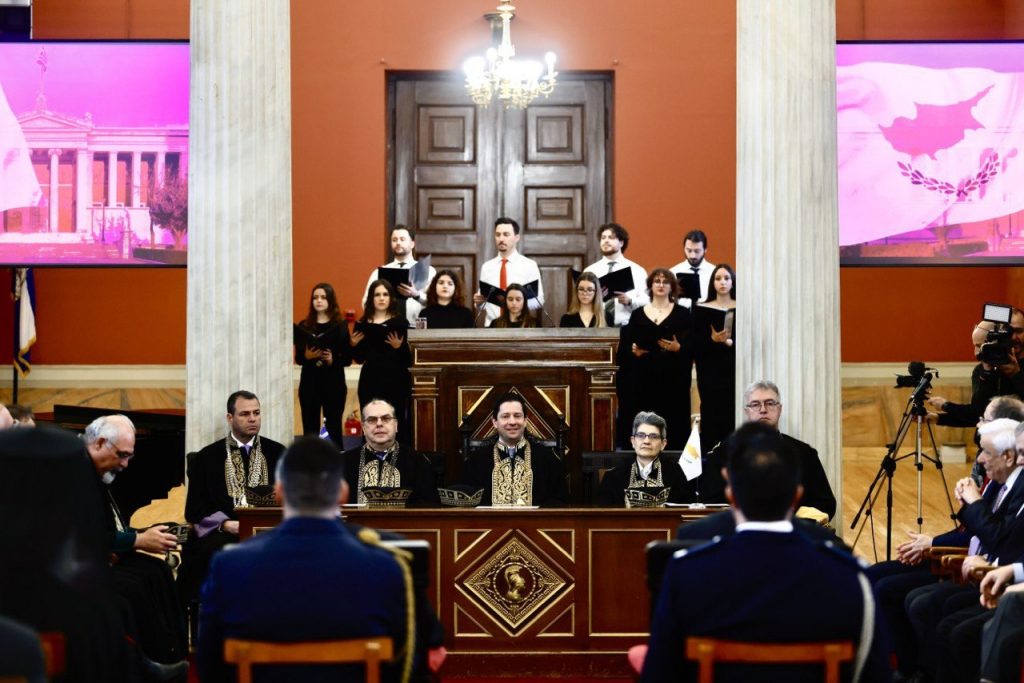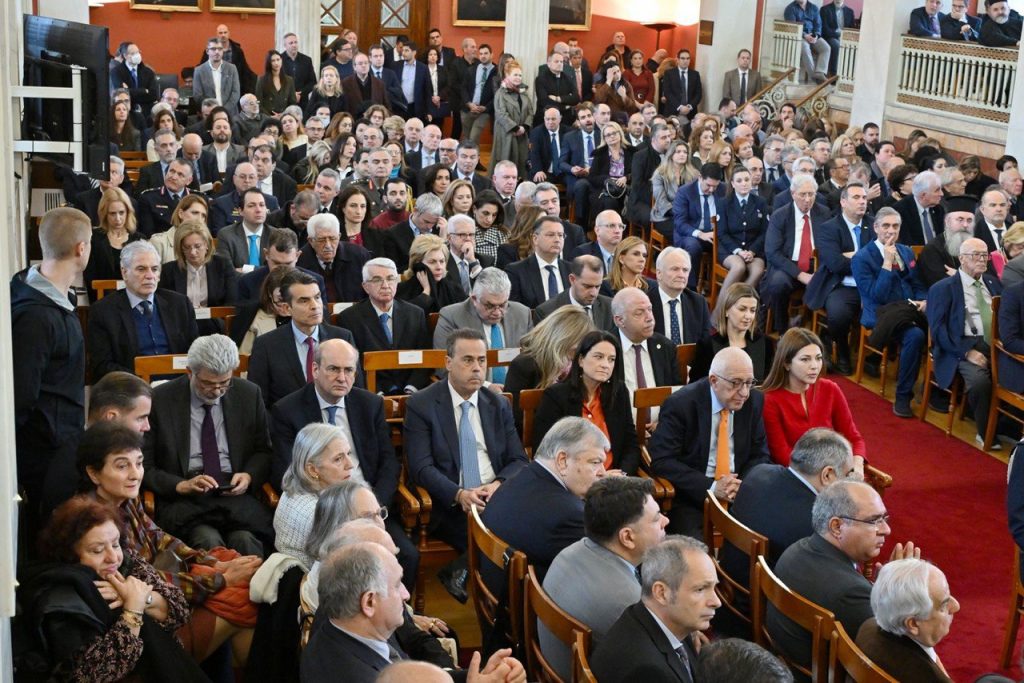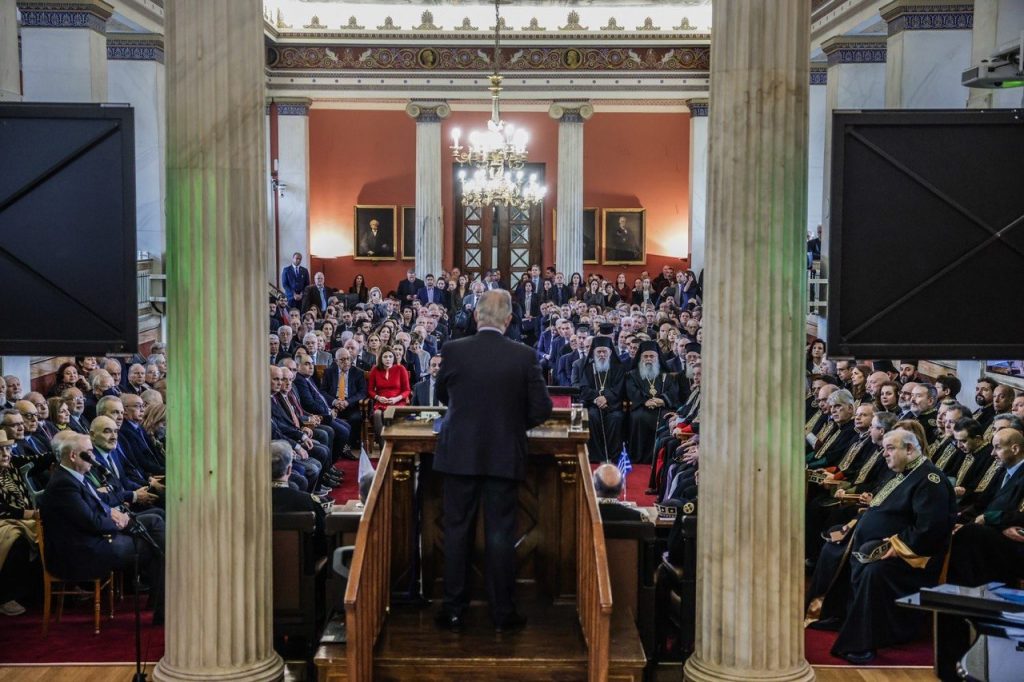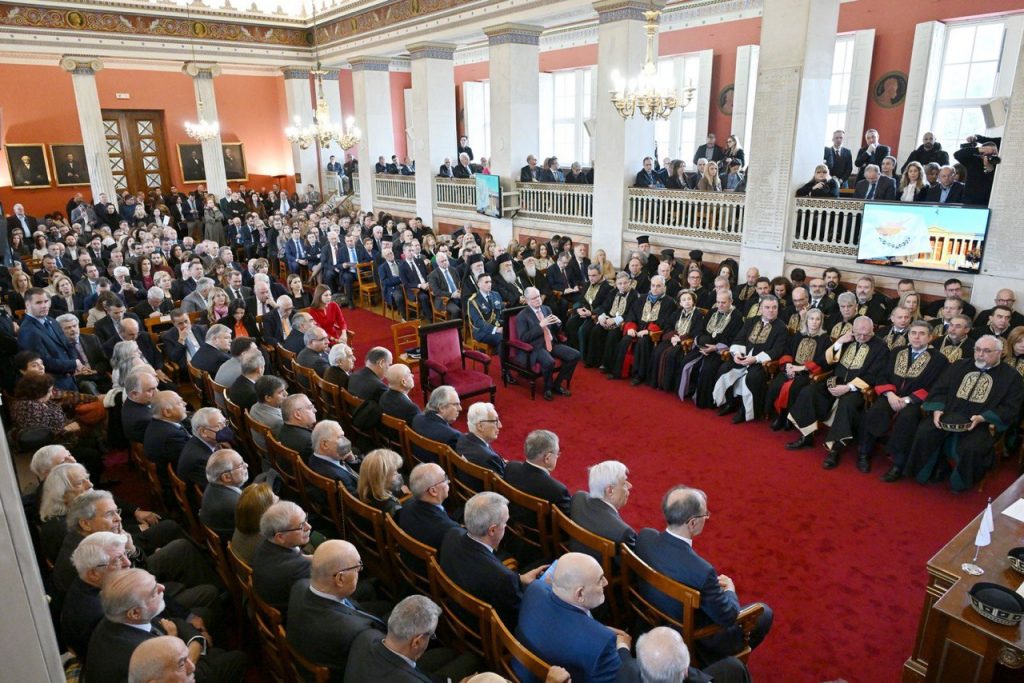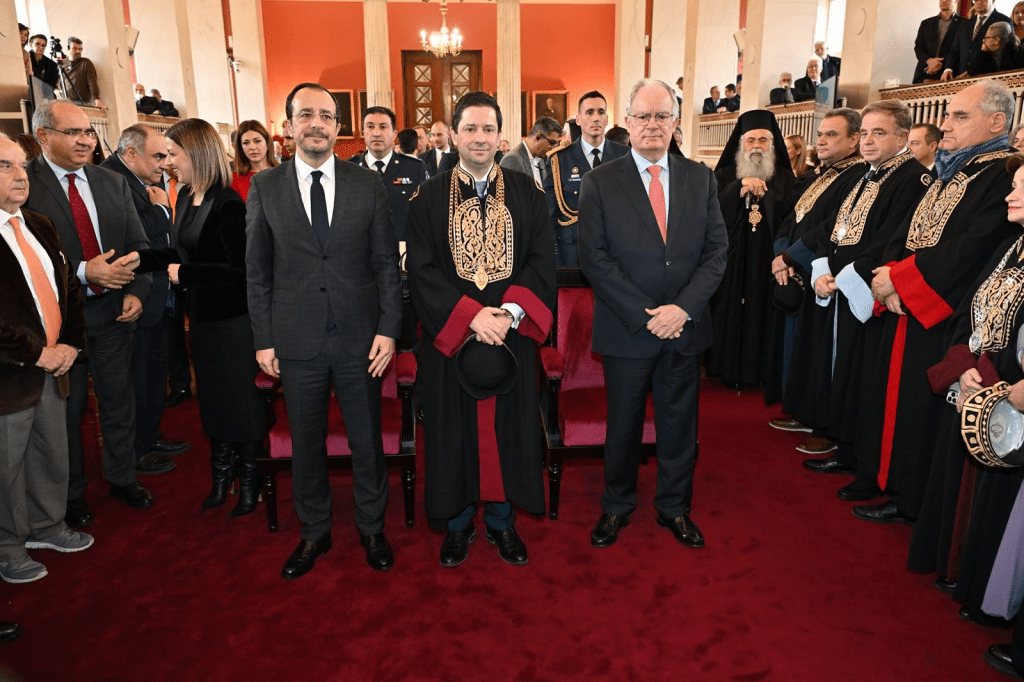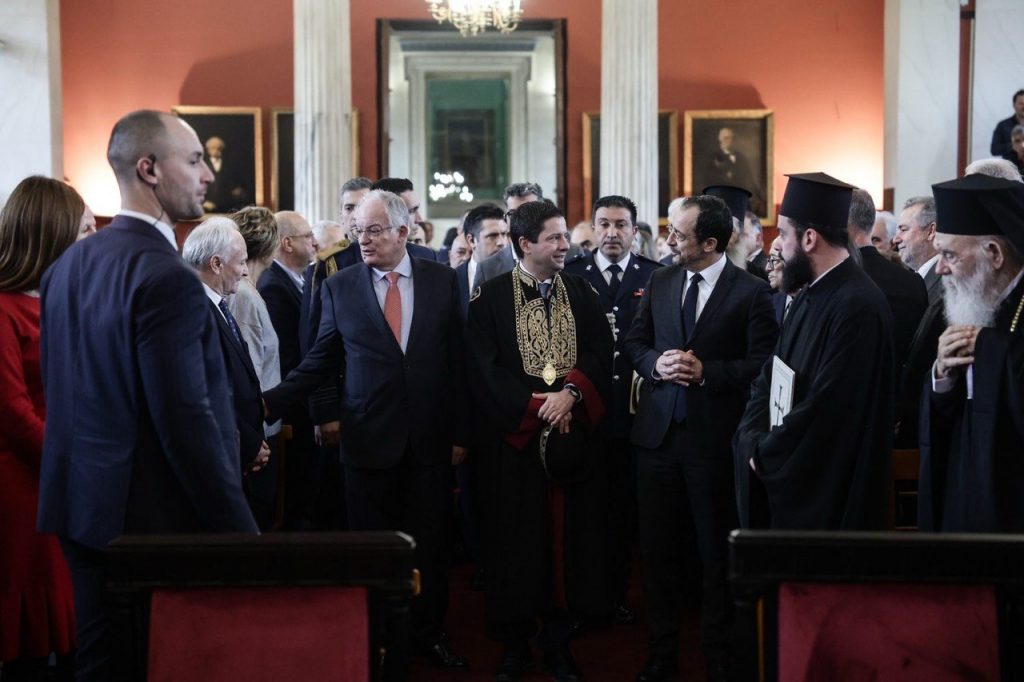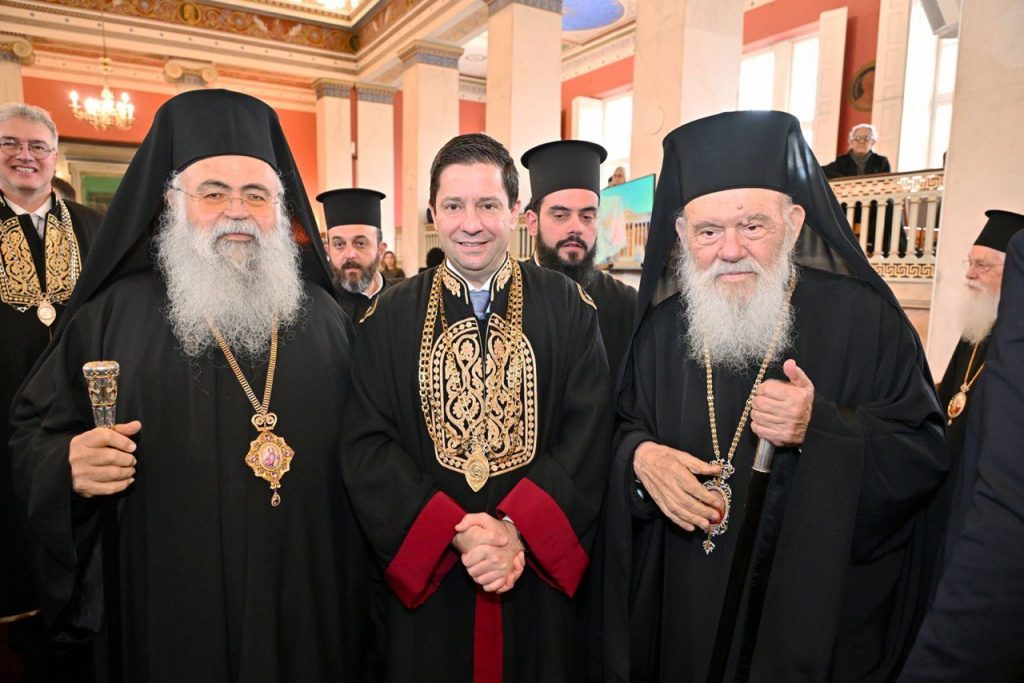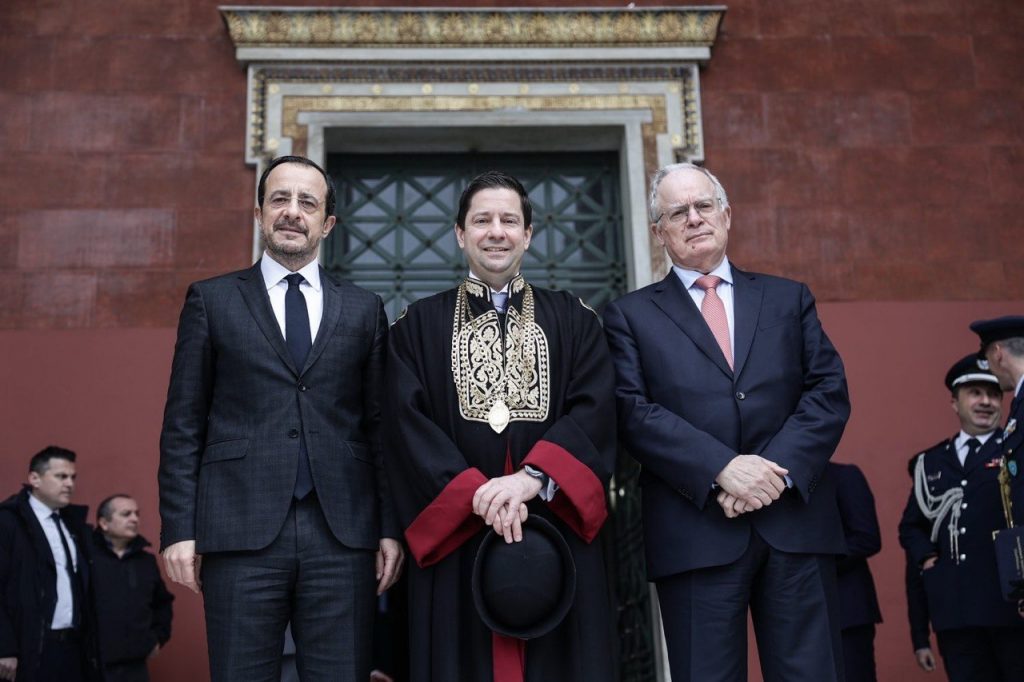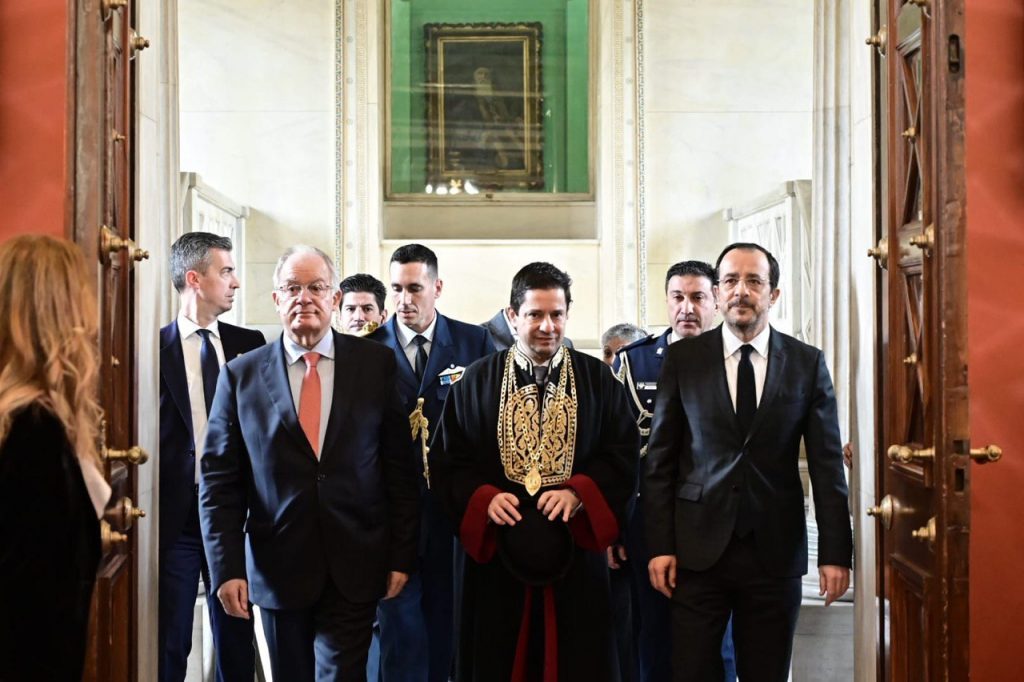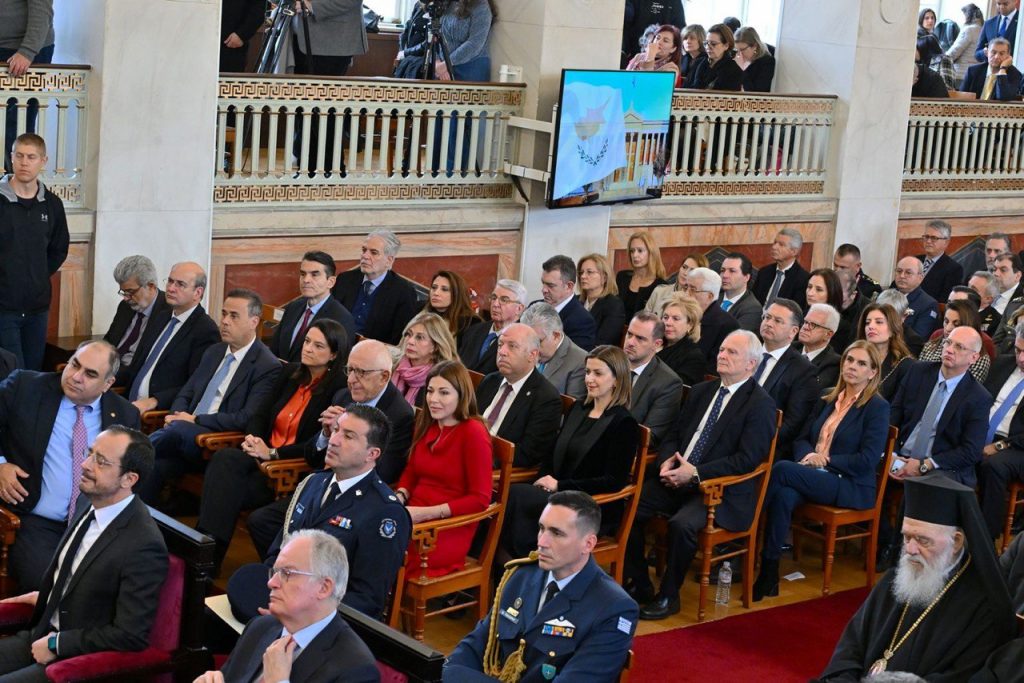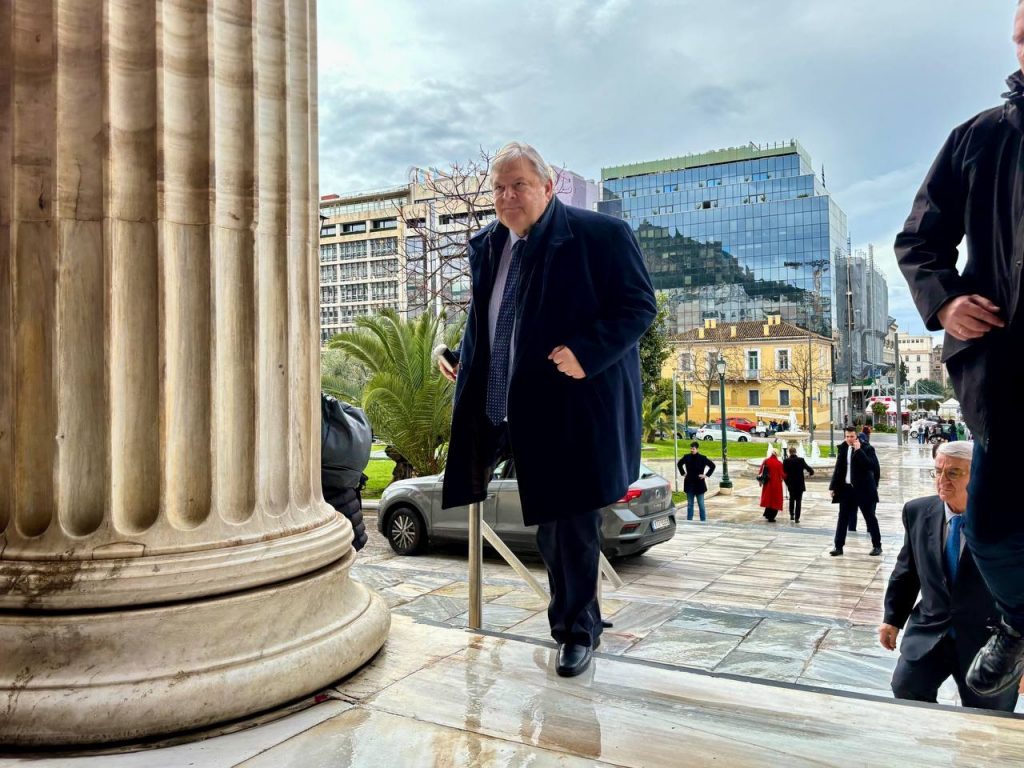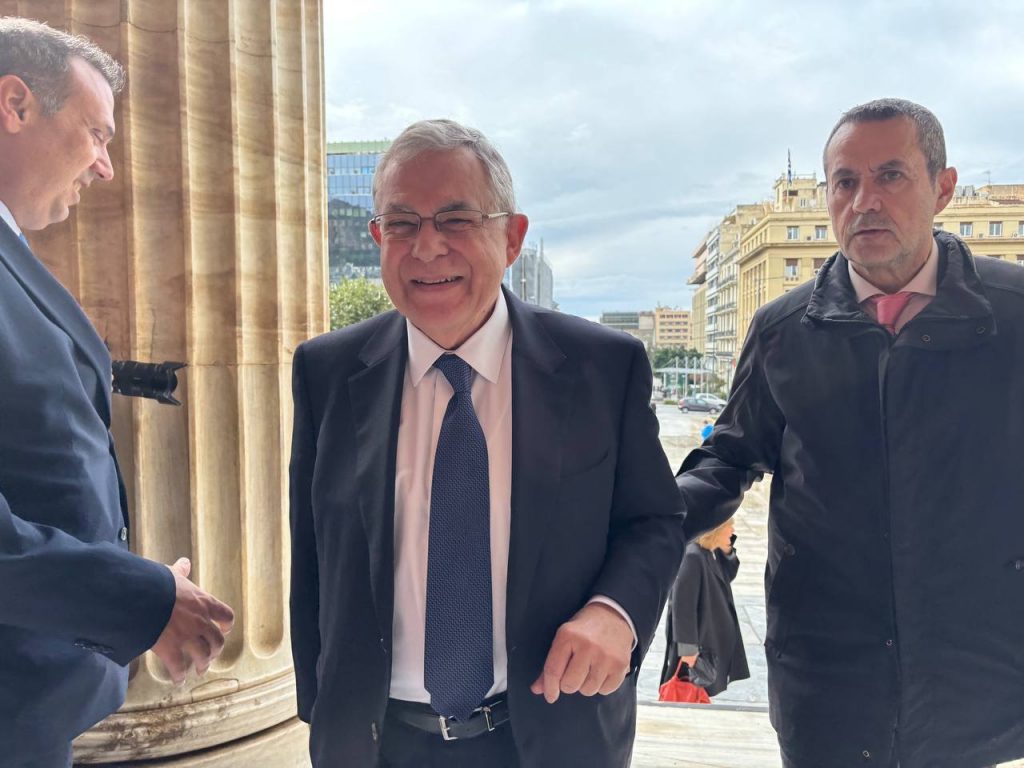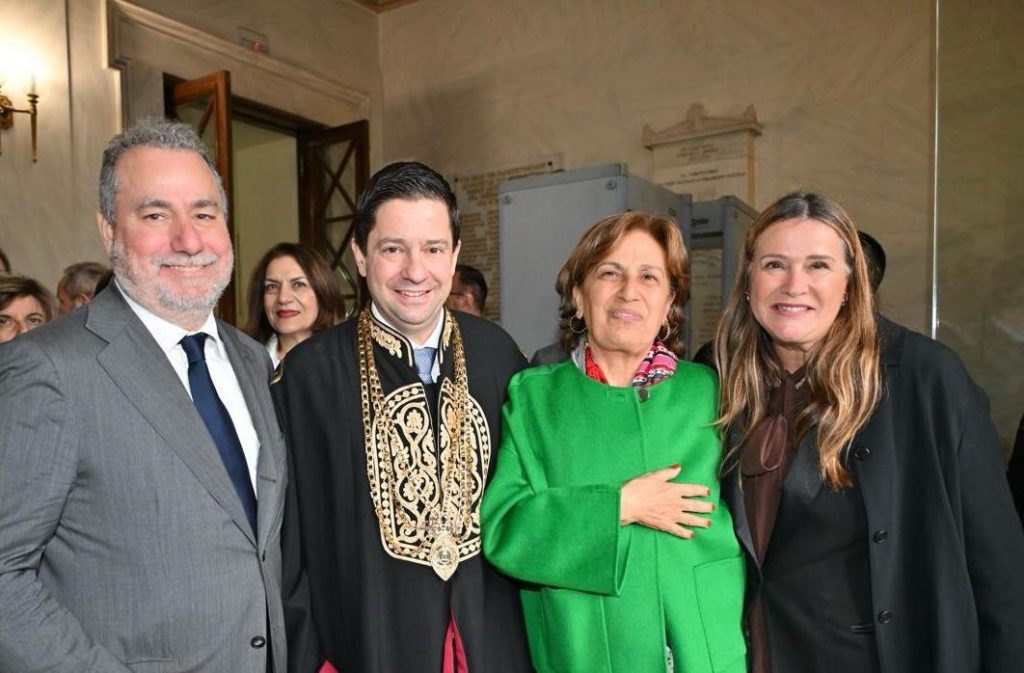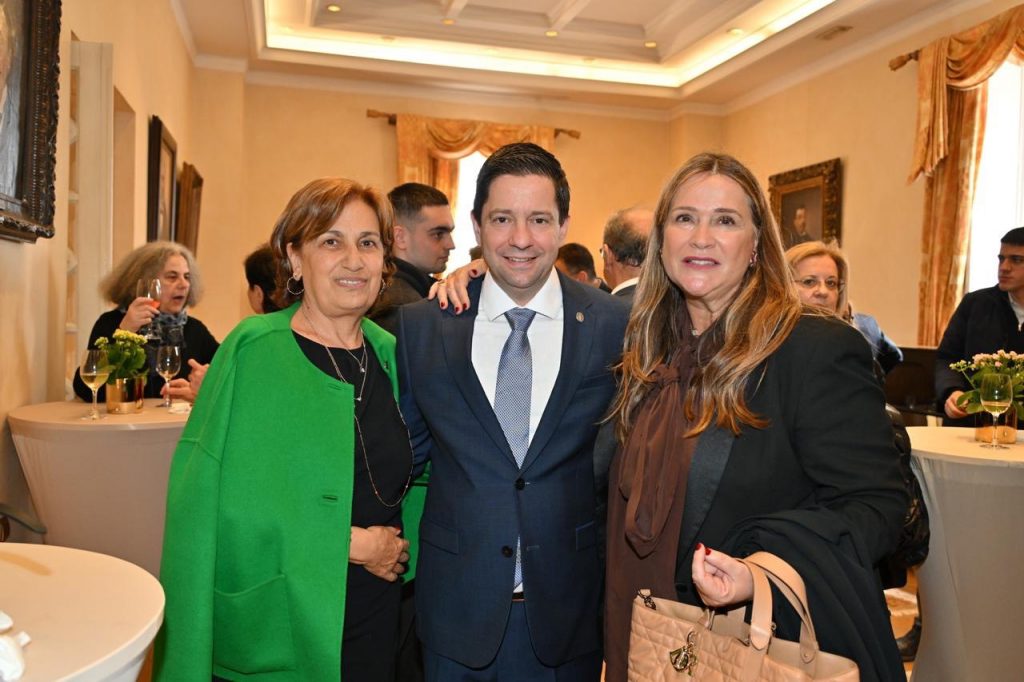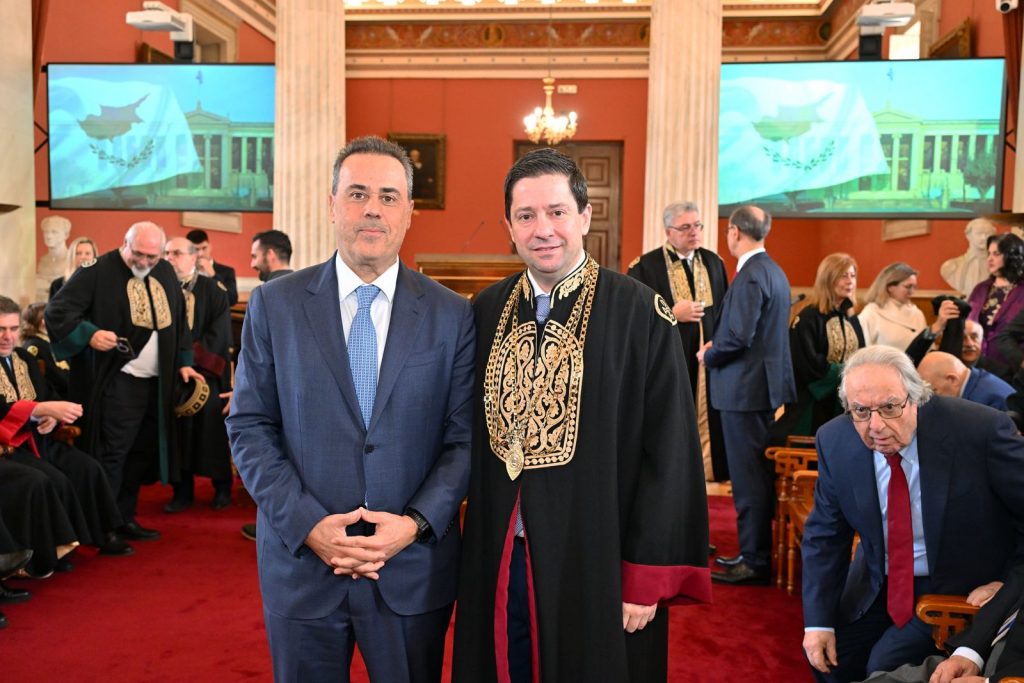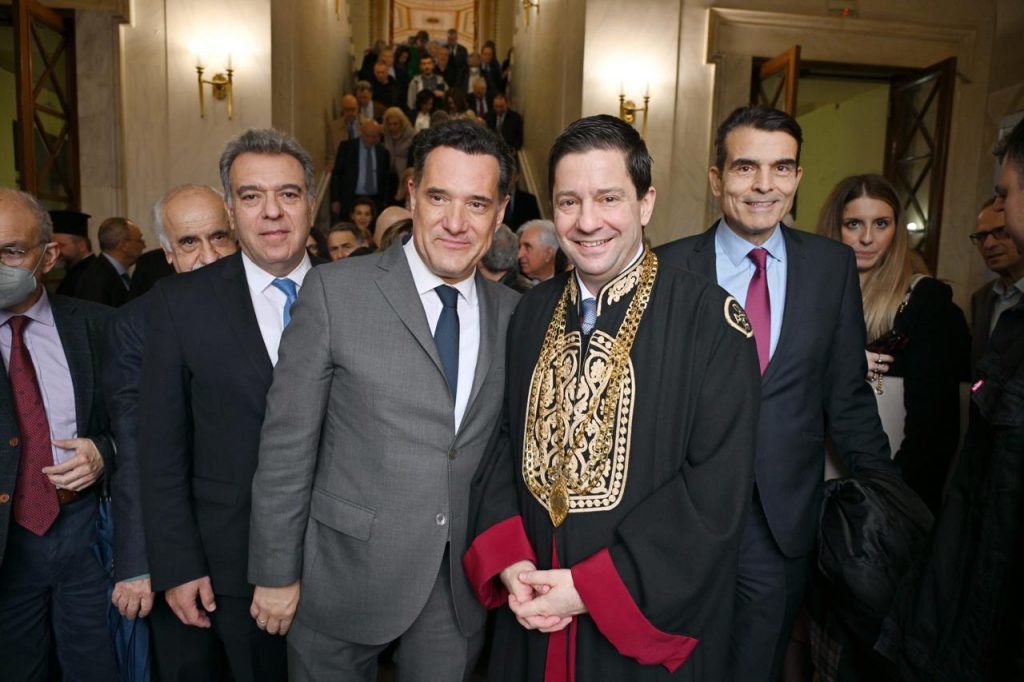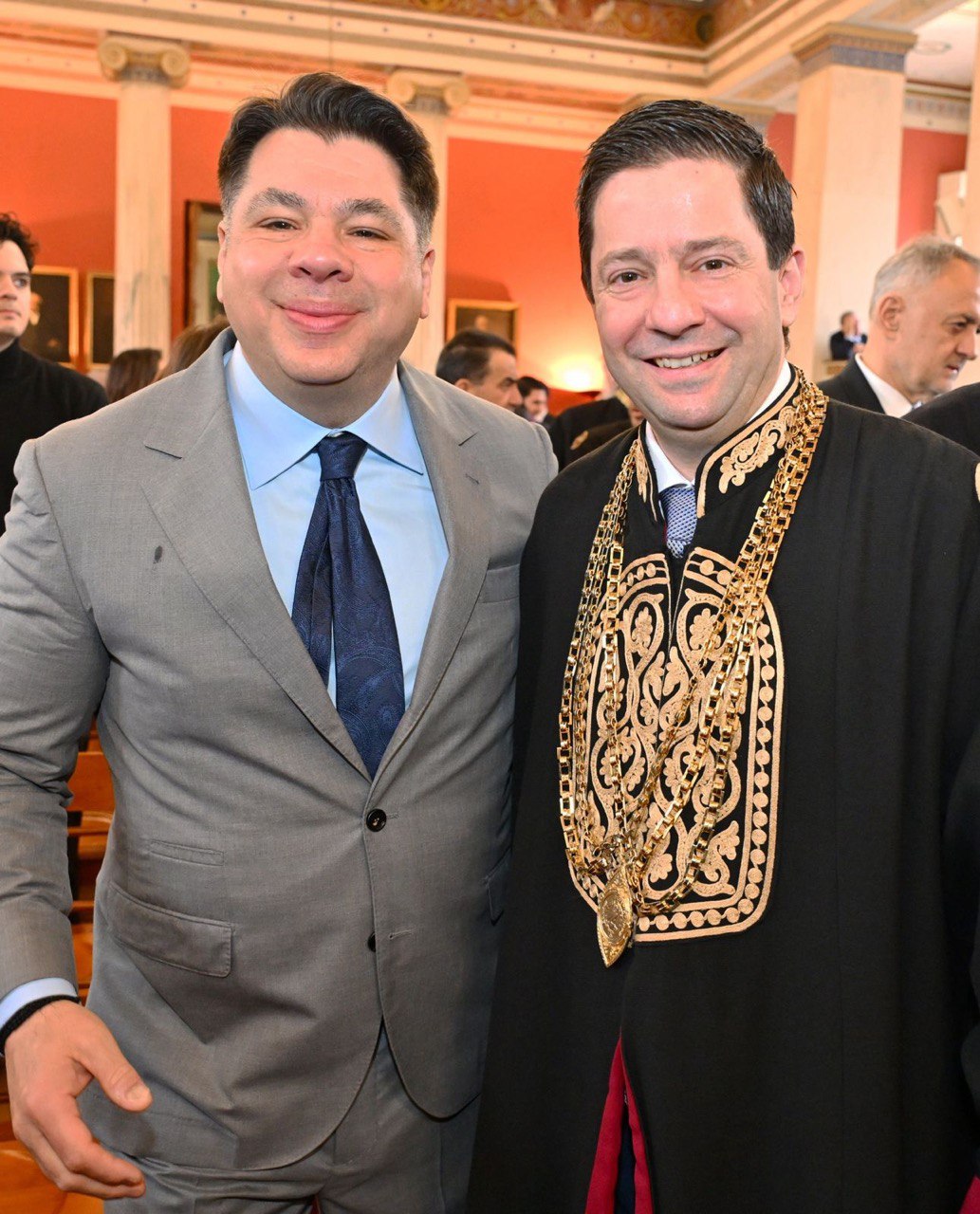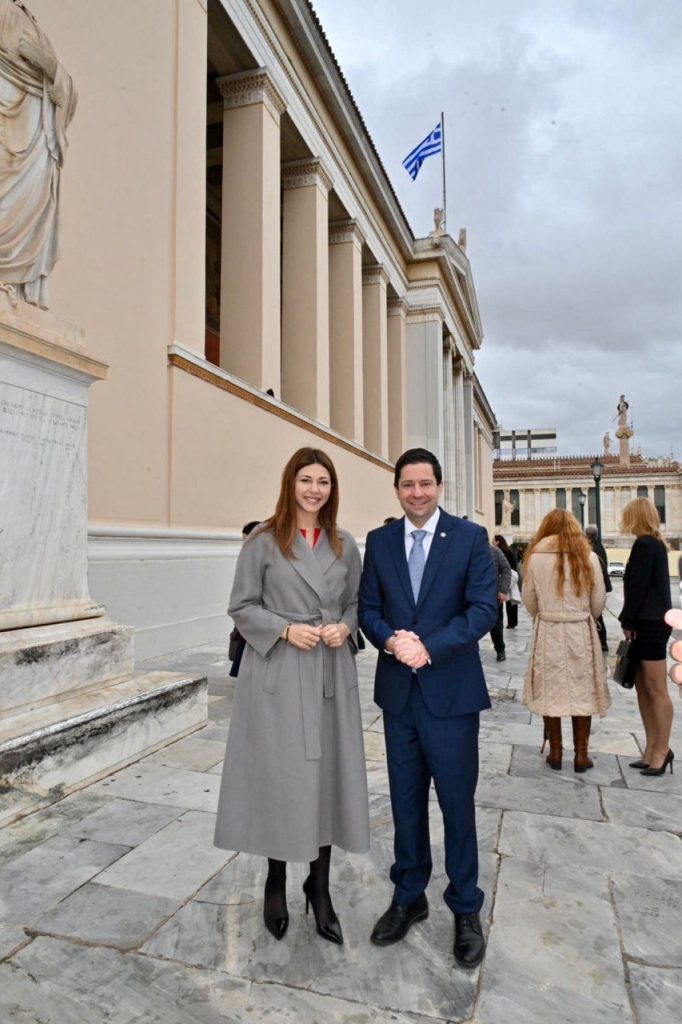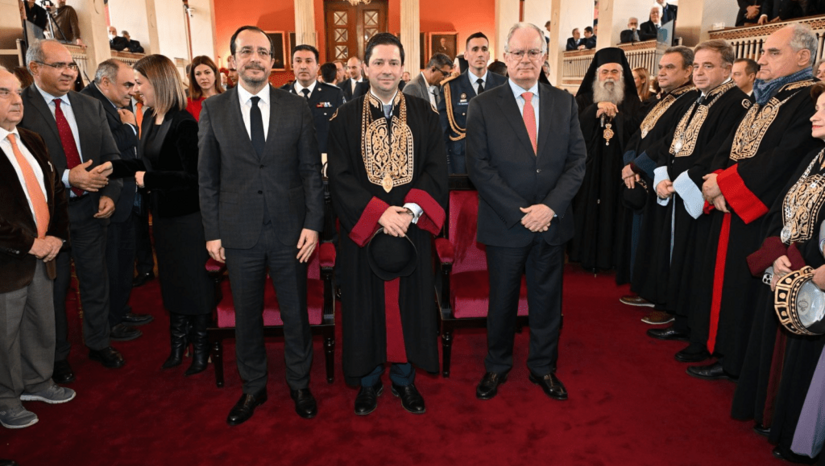
The official ceremony marking the launch of the National and Kapodistrian University of Athens’ Cyprus Branch was held today, 17 February 2026, in the Great Hall of the University’s main building, opening a significant new chapter in the Institution’s long and distinguished history. Among those in attendance were the President of the Hellenic Republic, Constantine An. Tasoulas; the President of the Republic of Cyprus, Nikos Christodoulides; His Beatitude Ieronymos II, Archbishop of Athens and All Greece; and His Beatitude Georgios, Archbishop of Nova Justiniana and All Cyprus. Their presence underscored the symbolic significance of the occasion, reflecting a shared commitment to education, culture, and the enduring ties between the two countries, with higher education and the University of Athens at its heart.
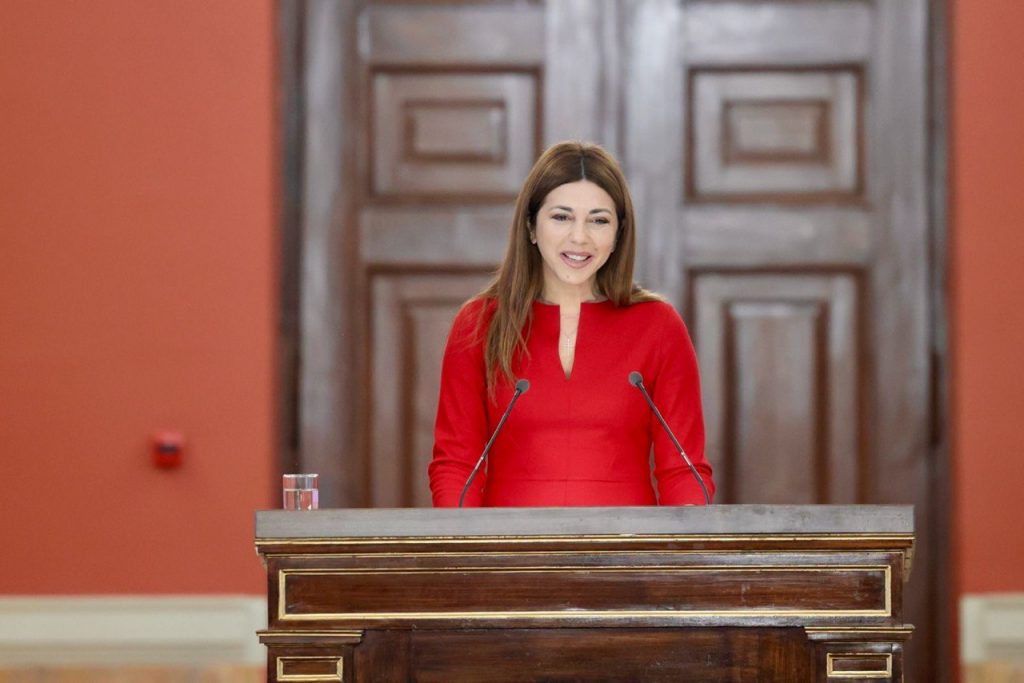
University Rector Professor Gerasimos Siasos welcomed the distinguished guests, followed by addresses from the President of the Hellenic Republic, Constantine An. Tasoulas; the President of the Republic of Cyprus, Nikos Christodoulides; His Beatitude Ieronymos II, Archbishop of Athens and All Greece; His Beatitude Georgios, Archbishop of Nova Justiniana and All Cyprus; and the Minister of Education, Religious Affairs, and Sports, Sofia Zacharaki, representing the Prime Minister of Greece.
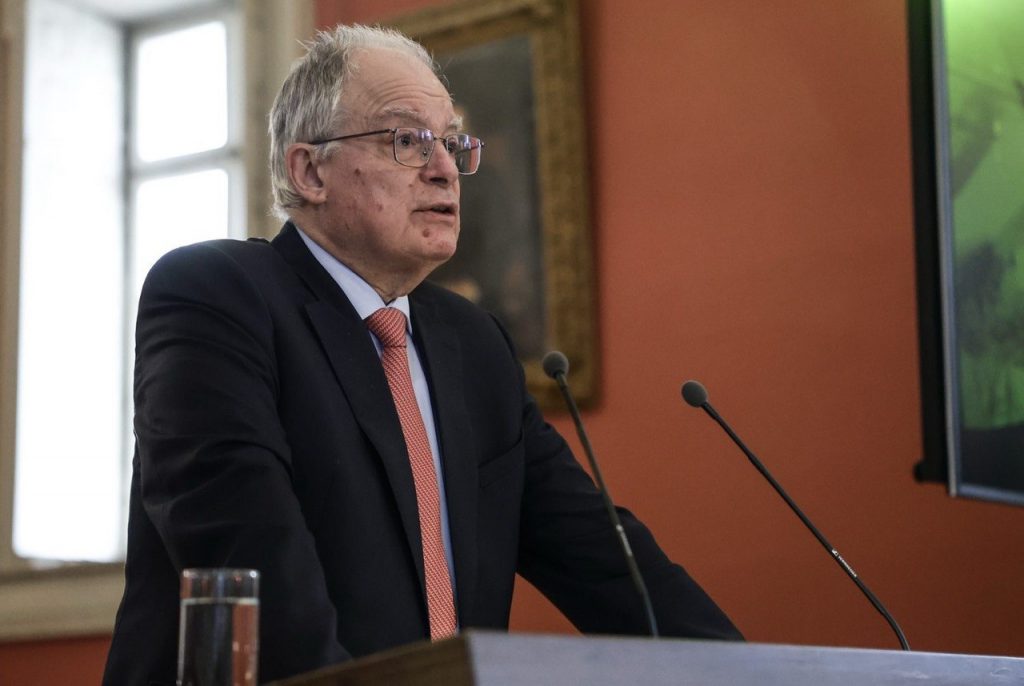
In his address, the President of the Hellenic Republic, Constantine An. Tasoulas, remarked, among other points: ‘Greece and Cyprus form one homeland — the place where the heart of the Hellenic World beats. For this reason, Rector Professor Siasos and the University’s leadership deserve warm congratulations for the courage, vision and determination they have shown in bringing this initiative to fruition. That is an undertaking that both symbolises and strengthens the unity of the Hellenic World. The Cyprus Branch is now called upon to become a point of reference for progress, innovation and international academic collaboration at the heart of the Eastern Mediterranean. If we are to preserve and deepen the ties between Greece and Cyprus — ties stretching back through the centuries — we must continue to open new pathways for future generations’.
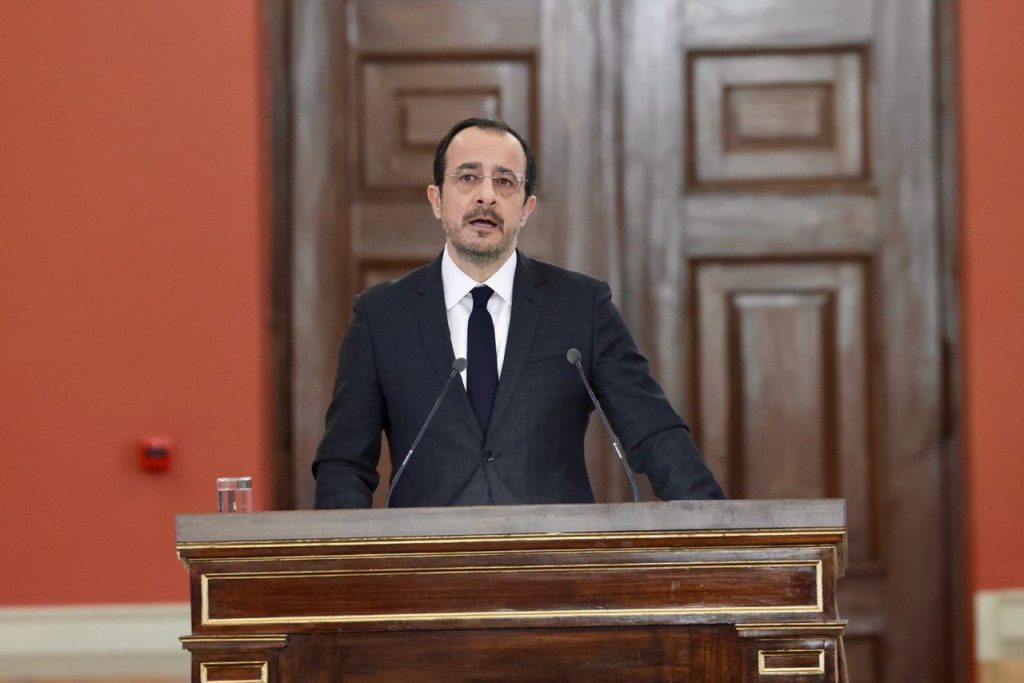
In his subsequent address, the President of the Republic of Cyprus, Nikos Christodoulides, emphasised that ‘The establishment and operation of a Cyprus Branch of the University of Athens — an institution with an academic and social legacy dating back to 1837 — marks the beginning of a significant new institutional and political era, further strengthening the fraternal bonds between Greece and Cyprus. These bonds have been forged through shared struggles, values and aspirations. Generations of Cypriots — myself among them — received the light of knowledge within this intellectual nursery. Beyond being a centre of learning, it has long stood as a beacon of education and a cradle of culture, consistently and meaningfully supporting the aspirations of the Greek Cypriot people. I am particularly proud that many of my compatriots, whether as students or members of the academic community, have secured a distinguished place in the history of this University, their names indelibly inscribed in our collective memory. The establishment of a branch of the National and Kapodistrian University of Athens in Cyprus represents the natural continuation of a historic course’.
In his keynote speech entitled ‘Cyprus and the University of Athens – Strengthening Two Centuries of Ties: The Opening of the Cyprus Branch’, Rector Professor Gerasimos Siasos traced the University’s journey from its founding in 1837 to its present expansion into Cyprus, noting: ‘Today’s ceremony marks a historic moment for the National and Kapodistrian University of Athens and for higher education in both Greece and Cyprus. The establishment and operation of the Cyprus Branch constitutes a landmark milestone — the most significant step in the internationalisation of the University to date. Our institution now enters a new era of international presence and academic outreach, reaffirming its enduring role as a leading university of the Hellenic World’.
At another point in his speech, the Rector underlined: ‘The presence of the University of Athens in Cyprus does not begin today; it represents the natural continuation of an uninterrupted course of intellectual, scientific and national partnership — above all through the education of hundreds of thousands of Cypriot students over two centuries in its lecture halls. It thus becomes the first and only Greek university to operate a branch outside Greece, choosing Cyprus for this historic step. Our next objective is the development of new undergraduate and postgraduate programmes, the attraction of students from across other continents, the production of innovative research, and enhanced educational collaboration with Cyprus’ high-calibre universities. By laying the foundations of Greece’s leading university in Cyprus, we express our conviction that academic cooperation between Greece and Cyprus will continue to serve as a powerful engine of development for both countries’.
Also in attendance were: Sofia Zacharaki, Minister of Education, Religious Affairs and Sports, representing the Prime Minister of Greece; Djuro Macut, Prime Minister of the Republic of Serbia and Doctor Honoris Causa of the University of Athens; Nikitas Kaklamanis, Speaker of the Hellenic Parliament; Kostis Hatzidakis, Vice-President of the Hellenic Government; Ivica Dačić, Deputy Prime Minister of the Republic of Serbia; Prokopis Pavlopoulos, former President of the Hellenic Republic and Honorary Professor of the University of Athens; Lucas Papademos, former Prime Minister of Greece; His Eminence Theodoretos, Metropolitan of Laodicea and Representative of the Ecumenical Patriarchate in Athens; Nikos Dendias, Minister of National Defence; Adonis Georgiadis, Minister of Health; Niki Kerameus, Minister of Labour and Social Security; Takis Theodorikakos, Minister of Development; Konstantinos Tsiaras, Minister of Rural Development and Food; Stavros Papastavrou, Minister of the Environment and Energy; Lina Mendoni, Minister of Culture; Domna Michailidou, Minister of Social Cohesion and Family Affairs; Zoran Gajić, Minister of Sports of the Republic of Serbia; Eirini Agapidaki, Alternate Minister of Health; Konstantinos Kyranakis, Alternate Minister of Transport; Marios Themistocleous, Deputy Minister of Health; Georgios Kotsiras, Deputy Minister of Economy and Finance; Ioannis Andrianos, Deputy Minister of Agricultural Development; His Excellency, Stavros Avgoustides, Ambassador of Cyprus to Greece; Kyriacos Kenevezos, Honorary Ambassador of the Republic of Cyprus; George Tsounis, former Ambassador of the United States of America to Greece; Yiannis Antoniou, Deputy Government Spokesperson of the Republic of Cyprus; His Eminence Symeon, Metropolitan of Phthiotida; His Eminence Gregorios, Metropolitan of Peristeri and faculty member at the University of Athens; Revd Fr Kyprianos Kountouris, Director of the Theological School of the Church of Cyprus; Paraskevi Dramalioti, Secretary General of Coordination at the Presidency of the Government; Maira Myrogianni, Secretary General for Greeks Abroad and Public Diplomacy; Theoni Alampasi, Secretary General for Financial Sector and Private Debt Management; Aris Angelis, Secretary General for Strategic Planning; Spyidon Stathoulis, Secretary General for the Reception of Asylum Seekers; Dimitrios Terzis, Secretary General for Research and Innovation; Napoleon Maravegias, Secretary General for Commerce; and Antonios Filippis, Secretary General for Rural Policy and International Affairs.
Other distinguished guests included: Members of the Hellenic Parliament ,Tasos Chatzivasileiou, Dr Michalis Chourdakis, Angeliki Delikari, Diamantis Gkolidakis, Olga Gerovasili, Ioannis Giorgos, Manos Konsolas, Marina Kontotoli, Dimitrios Kouvelas, Neoklis Kritikos, Zetta M. Makri, Anna Mani-Papadimitriou, Thomais Oikonomou, Michalis G. Papadopoulos, Stavros Papasotiriou, Athanasios Papathanasis, Maximos Senetakis, Kostas Skrekas, Marilena Soukouli-Viliali, Aristotelis Spanias, Dionisios Stamenitis, Angelos Syrigos, Georgios Stylios, Eyrypidis Stylianides, Nikolaos Vrettos, Andreas Voryllas, Zoi Rapti ; Evangelos Venizelos, former Vice-President of the Hellenic Government; Michalis Stathopoulos former Rector of the University of Athens, Honorary Professor, and Member of the Academy of Athens; Georgios Babiniotis, former Rector and Honorary Professor of the University of Athens; Christos Kittas, former Rector and Emeritus Professor of the University of Athens; Dimosthenis Asimakopoulos, former Rector and Emeritus Professor of the University of Athens; Theodoros Fortsakis, former Rector and Emeritus Professor of the University of Athens; Professor Ioannis Chatjigeorgiou, Rector of the National Technical University of Athens; Professor Christina Koulouri, Rector of Panteion University of Social and Political Sciences; Professor Georgios Dedoussis, Rector of Harokopio University of Athens; Professor Michail Sfakianakis, Rector of the University of Piraeus; Professor Vasilios Vasdekis, Rector of Athens University of Economics and Business; Dr Erato Hatzisavva, Rector of the Athens School of Fine Arts; Professor Panagiotis Kaldis, Rector of the University of West Attica; Professor Emmanouil Koutouzis, Rector of the Hellenic Open University; Professor Athanassios Katsis, Rector of the University of the Peloponnese; Niki Marioli, President of the Legal Council of State; Panagiotis Lymperopoulos, Vice-President of the Supreme Civil and Criminal Court of Greece; Loucas Xenophontos, Cultural Attaché of the Embassy of the Republic of Cyprus in Athens; Diomides Nikita, Director of the ‘House of Cyprus’; Police Lieutenant General Lazaros Mavropoulos, Chief of the Hellenic Police; and Major General Marios Bantouvas, Commander of the Hellenic Air Training Command, representing the Hellenic Air Force General Staff.
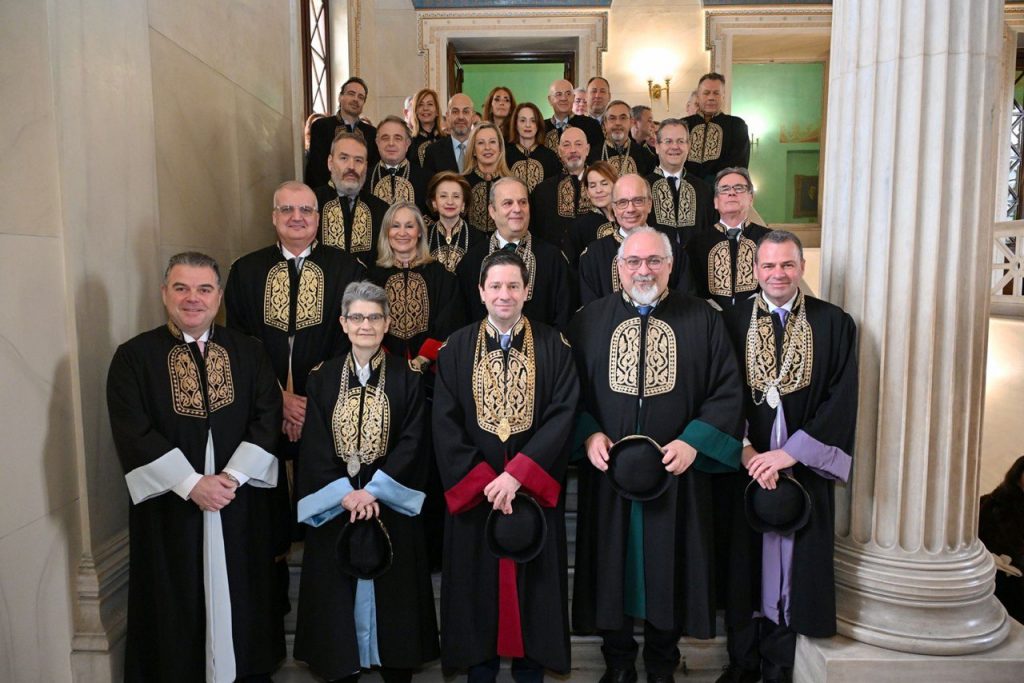
Joining the ceremony from the National and Kapodistrian University of Athens were: Nikolaos Thomaidis, Alternate Chair of the Administration Council; Professor Spyridon Vlachopoulos, Member of the Administration Council; Professor Dimitrios Kenourgios, Member of the Administration Council; Professor Athanasia Smirniotou, Member of the Administration Council; Professor Achilleas Chaldaeakes, Member of the Administration Council; Professor Emeritus Anastasios Germenis, Member of the Administration Council; Georgios Stasinos, President of the Technical Chamber of Greece and Member of the Administration Council; Pantelis Tzortzakis, Chief Executive Officer of the Hellenic Centre for Defence Innovation and Member of the Administration Council; Professors Efstathios Efstathopoulos, Sophia Papaioannou, Aristeidis Samitas, and Christos Karagiannis, Vice-Rectors; the Deans of Schools; the Chairs of Departments; Eleni Vasilopoulou, Executive Director; as well as numerous members of faculty and students.
Also present were representatives from the banking and business sectors as well as Anna Rokofyllou, President of the Youth and Lifelong Learning Foundation; former Rector and Professor Pericles Mitkas, President of the Hellenic Authority for Higher Education; George Pitsilis, Governor of the Independent Authority for Public Revenue; Nicolaos Megalemos, Chairman of the Nicosia Greek Schools Board of Governors; and Georgios Kavvathas, President of the Hellenic Confederation of Professionals, Craftsmen, and Merchants.
Following the Rector’s address, a video titled ‘The National and Kapodistrian University of Athens – From Its Foundation in 1837 to 2025 and the Opening of the Branch in Cyprus’ was screened, reflecting on the University’s rich history while highlighting its ambitions for the future.
At a time when education faces diverse global challenges, this historic step towards internationalisation — the establishment of the University of Athens’ Cyprus Branch — ensures that the bonds of knowledge, culture, and humanistic values remain strong and dynamic, while simultaneously opening new avenues of collaboration for future generations.
Address by the President of the Hellenic Republic, Constantine An. Tasoulas
‘In 1805, a young boy from Cyprus left his Ottoman-ruled homeland and travelled to Corfu. He presented himself before the Inspector of Schools and asked for help in acquiring a Greek education.
Having met the boy, the Inspector wrote to the Lord High Commissioner of the Ionian Islands requesting 63 thalers for his upkeep, noting that one day he might return to Cyprus as a teacher of the Greek language. Once the funds had been secured, the Inspector entrusted him to the Director of the Corfu Public School, a precursor to the Ionian Academy.
The Inspector was none other than Ioannis Kapodistrias. This story was first recounted in 1987, during an event marking the 150th anniversary of the University of Athens, by the then Rector and now Member of the Academy of Athens, Michalis Stathopoulos.
It is a moving episode, one that captures the enduring bond between Greece and Cyprus. We are united by a shared struggle for freedom — and freedom, ladies and gentlemen, if it is to be meaningful, depends upon education.
The tireless effort to preserve and uphold Hellenism has been the deeper spiritual force shaping relations between Greece and Cyprus long before the establishment of the modern Greek state. Many Cypriots were initiated into the Filiki Eteria (the Society of Friends), affirming that Cyprus took an active part in the national call to liberty. Through harsh trials and successive violations of its rights, Cyprus preserved its Hellenic identity without ever severing its ties with Greece.
From its inception, the University of Athens carried a distinct vision: national fulfilment and the close alignment of scholarship with the ideals of the nation. Its first Rector, Konstantinos Schinas, described it as an “amphictyonic bond that unites all Greeks who revere knowledge, throughout the world”, a spiritual link transcending the narrow frontiers of the state.
Cyprus became closely associated with the University of Athens, particularly after the Crimean War, when increasing numbers of Cypriot students filled its lecture halls. Thousands later returned to the island, bringing with them the values of classical Greek education and contributing decisively to its intellectual and economic development.
Others, whether of Cypriot origin or having served in Cyprus as teachers and headmasters, later distinguished themselves as members of the University’s academic staff: Nikolaos Saripolos, Simos Menardos, Michalis Volonakis, Ioannis Sykoutris, and many more.
Ladies and gentlemen,
Greece and Cyprus form one homeland — the place where the heart of Hellenism beats. Warm congratulations are therefore due to Rector Professor Siasos and to the University’s leadership for the courage, foresight, determination, and effectiveness with which they have brought this undertaking to fruition. It is an initiative that both symbolises and strengthens the unity of Hellenism.
The Cyprus Branch is now called upon to become a point of reference for progress, innovation, and international academic collaboration at the heart of the Eastern Mediterranean.
If we are to preserve and deepen the ties between Greece and Cyprus — ties stretching back through the centuries — we shall do so only by opening new paths for the generations to come’.
Address by the President of the Republic of Cyprus, Nikos Christodoulides
‘Before turning to any other matter, I wish to express my profound sorrow at the passing of Eleni Glykatzi-Ahrweiler — a distinguished Greek scholar and a citizen of the world — who devoted her life to letters, to the discipline of history and, above all, to the pursuit of truth. From the podium of the University of Athens, where she herself once studied, I convey, on behalf of the Government of the Republic of Cyprus and the Cypriot people, our heartfelt condolences.
It is with genuine pleasure and pride that I take part in today’s event, as we formally mark here in Athens the recent establishment and operation of the Cyprus Branch of the National and Kapodistrian University of Athens.
Beyond the sense of joy and pride, I feel a particular honour and emotion in representing, at this dignified ceremony hosted by the oldest higher education institution of modern Greece, the Republic of Cyprus and its people.
Ladies and gentlemen,
The creation and operation of a Cyprus Branch of the University of Athens — an institution whose academic and social tradition stretches back to 1837 — marks the beginning of an important new chapter, further strengthening the fraternal ties between Greece and Cyprus. These are bonds forged in shared struggles, values, and aspirations.
Generations of Cypriots — myself among them — first encountered the light of knowledge within this intellectual nursery. The University has long been more than a place of study: it has been, and remains, a beacon of learning and a cradle of culture, steadfast in its moral and practical support for the struggles of the Hellenism of Cyprus.
I feel a deep sense of pride that many of my compatriots, whether as students or scholars, secured a distinguished place in the history of this University, their names indelibly inscribed in our collective memory. I recall, first, Konstantinos Koilaniotis, Michail Stivaros, and Petros Hadjiargyrou — three students of the University of Athens who fell fighting for Greece’s freedom during the Balkan Wars.
We also remember the medical students Loukis Liasidis and Varnavas Serifis from Famagusta, who lost their lives in the Greco-Italian War.
Dozens of eminent Cypriots were graduates of this University: among them the later Mayor of Limassol, Christodoulos Sozos, who fell at the Battle of Bizani during the liberation of Ioannina; his fellow student, the ardent political figure and fighter Nikolaos Cleanthous Lanitis; the pioneering journalist and publisher Giorgos Frangoudis; and many others whose degrees bore the signature of the great poet Kostis Palamas, who served for many years as Secretary of the University.
Of the dozens of Cypriots who taught at the University of Athens, allow me to mention in particular the constitutional scholar Nikolaos-Ioannis Saripolos, a founder of public law in Greece and Dean of the School of Law; his son, also a constitutional scholar, Nikolaos Saripolos; and Simos Menardos, Dean of the School of Philosophy and later Rector of the University.
I must also acknowledge those scholars whose work advanced Cypriot studies — Georgios Vizyinos, Philios Zannetos, Michail Volonakis, Konstantinos Amantos, and Ioannis Sykoutris.
These men, together with many others, form the living thread that binds Cyprus to the University of Athens. They are the custodians of a fraternal relationship centuries in the making — a relationship that does not rest solely on history, but serves as a foundation for building a future that is sustainable, pragmatic, and resilient.
Ladies and gentlemen,
The material and intellectual support offered by the University of Athens and its people — and indeed by all our Greek brothers and sisters — to the people of Cyprus has been of immense significance.
At every turning point in our modern history, most notably during the defining struggle of Cypriot Hellenism, the historic liberation struggle of EOKA (1955–59), which led to Cyprus’ independence, and again following the devastation caused by the barbaric Turkish invasion of 1974, our Greek brothers and sisters stood by us. For that solidarity, our gratitude is enduring.
Ladies and gentlemen,
The establishment of the Cyprus Branch of the National and Kapodistrian University of Athens is the natural continuation of a long historical journey.
This was by no means an easy undertaking. It has been made possible by the dedication of those who believed in this vision — first and foremost the Rector, our esteemed Professor Gerasimos Siasos, whom I wish once again publicly to congratulate and thank.
At the same time, the creation of the Branch constitutes an important milestone in our broader effort to further internationalise and upgrade higher education in Cyprus. It reinforces our strategic objective of transforming our country into a regional hub for knowledge, research, and innovation, with tangible, multi-layered benefits for society, the economy, and the international standing of the Republic of Cyprus.
The presence of the National and Kapodistrian University of Athens in Nicosia meaningfully enriches Cyprus’ academic landscape, encourages synergies and partnerships, and expands opportunities for academic and research development.
It also lays the groundwork for a new institutional framework that will facilitate and encourage the establishment in Cyprus of branches of other internationally recognised academic and research institutions — to the benefit of the scientific community, our society, and our economy.
As a Government, we are investing in the strengthening of our country’s academic and research ecosystem, creating the necessary conditions for a dynamic scholarly community to flourish. In this context, we actively support every initiative that enhances higher education and broadens international cooperation with universities and research centres, with the clear ambition that Cyprus should emerge as a recognised hub of excellence and innovation on the global academic map.
Our policy over recent years makes it plain that higher education is viewed as a core pillar of development. We are working, among other priorities, to align higher education more closely with contemporary social, economic, and technological realities. Technological transformation — particularly artificial intelligence — geoeconomic fragmentation, economic uncertainty, demographic change, and the green transition, whether individually or in combination, are among the principal forces expected to shape and transform our future in the years ahead.
Ladies and gentlemen,
We find ourselves at a particularly auspicious historical moment. Thirty-six years after the establishment of the University of Cyprus — the country’s first public university, which undeniably broadened the horizons of higher education in Cyprus — we have now inaugurated the Cyprus Branch of the University of Athens. At the same time, Cypriot universities themselves are expanding into Greece and other European countries, demonstrating the prospects opening up in the field of education in a constantly changing pan-European and internationalised environment.
All of this attests to the dynamism unfolding within the field of education, a dynamism that also serves as a magnet for further high-quality investment in both Cyprus and Greece.
It allows us to look to the future with confidence and optimism, drawing strength from the synergies we are cultivating through an outward-looking strategy grounded in realism and stability. Cyprus and Greece — Greece and Cyprus — move forward together along a path of predictability and progress.
The high-level work produced by our universities must find practical application, contributing to the development of our countries and to addressing the growing challenges we face internationally, always with the aim of improving the everyday lives of our citizens.
With these thoughts, I warmly welcome this initiative and take particular pride in representing the Republic of Cyprus and the Cypriot people at this dignified ceremony marking the establishment and operation of the Cyprus Branch of the National and Kapodistrian University of Athens. I am fully confident that it will enjoy a distinguished future, worthy of its rich legacy and the weight of its history’.
Address by the Archbishop of Athens and All Greece, Ieronymos II
‘I warmly welcome the establishment and operation of the Cyprus Branch of the National and Kapodistrian University of Athens, as well as today’s event marking this significant occasion.
The University of Athens — the oldest and largest higher education institution in Greece — holds a distinguished place in international rankings and has achieved some of its most notable advances in recent years. It engages in substantial research partnerships with leading universities worldwide and maintains a position of intellectual leadership among the educational and research institutions of the Balkan Peninsula. It also occupies a special place in the hearts of all of us who studied there and count ourselves among the fruits of its enduring legacy. That deep personal bond is strengthened by the many Cypriot students who have passed through its lecture halls, and by its Cypriot graduates over the course of two centuries — some of whom have gone on to become prominent figures in public life.
The time has now come for its great academic mission to extend to Cyprus. The National and Kapodistrian University of Athens – Cyprus Branch enhances the University’s presence in south-eastern Europe and further consolidates our ties with the Republic of Cyprus.
There is every reason to rejoice in this outward-looking development. Prospective academic collaborations with the University of Cyprus — a public institution of high standing — will undoubtedly prove mutually enriching, and it is society at large, in both Greece and Cyprus, that will ultimately reap the many benefits and achievements that flow from such cooperation. In an uncertain global environment, marked by unprecedented developments and uncharted waters at every level, education and learning will always remain the indispensable condition for any meaningful journey into the future. Young people in Cyprus will now have at their disposal another trusted arena in which to test themselves, to excel in research and innovation, to engage critically and creatively with the realities of their lives, to pass knowledge on to future generations, and to attain heights of scientific excellence and moral integrity — qualities of which our world stands in such pressing need.
I extend my congratulations to all who have contributed to the achievement we celebrate today. I pray that Our Lord Jesus Christ may abundantly bless the National and Kapodistrian University of Athens – Cyprus Branch and guide it in its noble mission’.
Address by the Archbishop of Nova Justiniana and All Cyprus, Georgios
‘It is with unfeigned joy that I rise to greet today’s gathering, organised on the occasion of the launch of academic programmes of the National and Kapodistrian University of Athens in Cyprus.
This day carries particular significance for Cyprus and for the wider Hellenic world beyond the borders of the Greek state. The presence of the National and Kapodistrian University of Athens in Cyprus constitutes an event not only of academic but of historical importance. It transcends the narrow confines of institutional expansion and is inscribed within the long-standing tradition of intellectual bonds between the University of Athens and the Hellenism of Cyprus.
Since its foundation in 1837 as the first university of the Greek nation, the National and Kapodistrian University of Athens has stood as a cornerstone of higher learning and of the intellectual regeneration of Hellenism. Its association with the name and vision of Ioannis Kapodistrias speaks to its deeper vocation — one extending beyond the transmission of knowledge to the formation of character, social responsibility, and national consciousness.
That vocation has long been felt, and continues to be felt, in Cyprus. For many years, the University admitted Cypriot graduates of the six-year secondary schools — today’s Lyceums — to all its academic programmes without entrance examinations and without numerical restriction, irrespective of the grades on their school leaving certificates, at a time when students from Greece itself competed fiercely for a limited number of places in certain Departments. Even today, entry examinations for Cypriot candidates are conducted locally for the places allocated to them. The principal difference is that the number of such places is now proportionally defined, owing to the existence of other Greek universities which likewise welcome Cypriot students.
We all recognise the profound impact this had upon the preservation of national self-awareness, of Hellenic ethos, and of the Greek way of life within our society. During the period of colonial rule, incentives were offered for study in the United Kingdom, with the clear aim of reshaping the cultural orientation of the island. It was anticipated that Cypriots educated there would adopt an British ethos and, upon returning home, would transmit it through our schools and institutions.
In that context, the role of Greek university education proved decisive. It acted as a bulwark against such designs and as an institutional safeguard of national resilience, at a time when education itself had become an arena of ideological and cultural contestation.
Throughout the years of British rule, the Church of Cyprus stood as the principal support and foremost representative of Cypriot Hellenism. In heading that historic institution today, I express my sincere and abiding gratitude to the National and Kapodistrian University of Athens for its steadfast stance and its enduring contribution to the national and spiritual survival and advancement of Cyprus.
The University’s high academic standing is internationally acknowledged and is reflected both in its scholarly output and in the consistent calibre of its graduates. It has long been, and remains, a place where scientific excellence, critical thought, and responsible public engagement are cultivated.
I count it a personal blessing to have studied in two of its Departments. In the course of my subsequent postgraduate studies in England, I came fully to appreciate the exceptionally high standard of learning that the University of Athens had afforded us.
For the Hellenism of Cyprus, Greek education has always been a fundamental condition of survival and progress. In this light, the presence in Cyprus of a historic Greek university — heir to the Kapodistrian vision — assumes particular significance for the present and the future of our homeland.
For this reason, we warmly congratulate the Rector, the academic staff, and all who have contributed to the realisation of this important undertaking. We wish the students every success in their academic pursuits and every strength as they prepare to offer their own creative service to society’.
Address by the Minister of Education, Sofia Zacharaki
‘It is with deep emotion and a profound sense of responsibility that I stand before you today at an occasion which marks a new and luminous milestone in the shared journey of Greece and Cyprus.
This is not merely a moment that honours our past; it is one that lays, with confidence and resolve, the foundations of our common future.
Today’s ceremony to mark the establishment and operation of the Cyprus Branch of the National and Kapodistrian University of Athens is far more than an institutional act.
It is an act of progress — and an act of faith.
Faith in the power of education.
Faith in the younger generation.
Faith in the deep and unshakeable bond between our two countries.
For Greece and Cyprus are bound not only by indissoluble ties of history.
But by the language that unites us, the values that guide us, and the vision that inspires us.
And today, through the vehicle of higher education, we write together a new chapter of academic excellence and cooperation.
Aristotle taught us that “education is the best provision for old age”.
Today, we invest in that provision — for a brighter and more secure tomorrow.
The University of Athens, the first and most historic university of our country, extends its reach beyond our borders.
Alongside this, new pathways now open up for students, academics, and researchers alike.
New opportunities for knowledge, outward engagement, innovation, and creative endeavour.
We demonstrate in practice that Greek public universities are emerging as centres of learning in south-eastern Europe, institutions of quality, standing, and international outlook.
They are capable of holding their own on the global academic stage.
They are capable of meeting the demanding educational challenges of our time.
We are doing so:
Through the expansion of undergraduate and postgraduate programmes within our public universities, attracting — for the first time — growing numbers of international scholars and students.
Through seventy-four joint and double postgraduate programmes between Greek universities and leading institutions abroad, including in Cyprus. I note, by way of example, the collaboration between the University of Patras and the University of Nicosia, as well as that between the University of West Attica and the Cyprus University of Technology.
Through a significant increase in funding for research and innovation, and for the upgrading and remodelling of facilities.
Through strengthened welfare provision and enhanced support for our students, including increased financial assistance and the development of new, modern, and secure halls of residence.
And through the historic reform that has paved the way for the establishment of the first four non-state universities in Greece, among them the University of Nicosia.
Ladies and gentlemen,
We are particularly moved by the fact that, for decades, thousands of Cypriots have pursued their studies at Greek universities, and especially at the National and Kapodistrian University of Athens, and have become true ambassadors of high-quality tertiary education beyond our borders, embodying the values and excellence they have gained.
Today, that legacy of knowledge and service returns to the island, stronger, more structured, and more strategically grounded.
I wish to offer my heartfelt congratulations to the National and Kapodistrian University of Athens, to its Rector, and to its academic community for their vision, dedication, and perseverance.
I also extend my warm thanks to the Government of the Republic of Cyprus and personally to the President for his tangible support, his steadfast belief in this endeavour, and the spirit of constructive cooperation that has brought us to this point.
Let me also say that this achievement did not come about overnight, nor by chance.
It builds upon the excellent work undertaken at the Ministry of Education by my predecessors, Niki Kerameus and Kyriakos Pierrakakis, whose initiatives laid essential foundations for the path we continue today.
Nor can I fail to acknowledge the seed from which today’s event has grown — the close and sustained cooperation with the Minister of Education, Sport, and Youth of the Republic of Cyprus, Athena Michaelidou.
Over these past months we have worked closely and productively, defining common priorities and joint actions in the field of education.
Indeed, the Hellenic Parliament recently ratified a new Programme of Cooperation in Education for 2023–2027, providing a strategic framework for collaboration in education, language, and culture, and further strengthening the ties between our two countries.
Our objective is clear:
to deliver to the younger generations an education that is strong and forward-looking — one that connects meaningfully with social policy and the labour market,
one grounded in advanced knowledge,
one committed to equality of opportunity,
one that supports every young person, without exclusion.
For knowledge must never be a privilege; it must be a right.
Ladies and gentlemen,
The Cyprus Branch of the National and Kapodistrian University of Athens is not merely an educational initiative.
It is an investment in human capital.
An investment in geopolitical stability, in cooperation, and in progress.
An investment in peace and in the cultural vitality of our wider region.
As Nelson Mandela put it, “education is the most powerful weapon which you can use to change the world”.
Today, Greece and Cyprus choose to change the world through knowledge.
With confidence.
With purpose.
And with vision.
We are committed to continuing our tangible support for our public universities.
To investing in the quality of studies they provide.
To strengthening their international orientation.
And to creating equal opportunities for our young people here, in their own country.
For we want our children to reach further than the horizon before them.
To dream boldly, and to have the means to realise those dreams.
Today, we take another step forward.
A step that unites us.
A step that inspires us.
A step that demonstrates that when Greece and Cyprus work together, they can achieve great and lasting things’.
The Legacy of the National and Kapodistrian University of Athens
Watch the full ceremony on the University of Athens’ YouTube channel: